Personalized Rhinoplasty & Facial Aesthetics in Gangnam, Seoul · Tel: +82-2-6954-1988
en-US

CLINICAL PROCEDURE GUIDE
Dermal Fillers
Dermal fillers at Le.J Plastic Surgery in Gangnam, Seoul restore lost facial volume and soften selected lines, injected personally by Dr. Ji Sun Kim after a medical assessment that covers vascular risk.

Dermal Fillers in Seoul at Le.J Plastic Surgery

Medically reviewed by Dr. Kim Ji Sun, M.D., M.S., Ph.D., Board-Certified Otolaryngologist · Le.J Plastic Surgery, Gangnam-gu, Seoul
Dermal fillers are injectable treatments used to restore lost facial volume, soften certain wrinkles and folds, and enhance facial features such as the lips, cheeks and chin. Many of them contain hyaluronic acid, a substance naturally found in the body. At Le.J Plastic Surgery in Gangnam-gu, Seoul it sits within the clinic's Skin Care range, and it is performed personally by Dr. Kim Ji Sun, the clinic's founder and Medical Director and the listed performing doctor for the parent Skin Care specialty.
Two things decide whether this treatment is the right one, and both are settled before any syringe is opened. The first is what the concern actually is: filler adds or restores volume, so it answers a hollow, a fold or a contour, not a line that only appears when the face moves. The second is where the product would go. Facial anatomy is the whole safety story here — the rare complications in this category come from a needle meeting a blood vessel, not from the material itself — which is why the assessment on this page is described at more length than the injection.
What Are Dermal Fillers?
A dermal filler is an injectable material placed under the skin to replace volume that has been lost, support a contour, or soften a fold, with the effect visible almost at once and lasting months rather than permanently.
The clinic's stated uses are restoring age-related volume loss, softening facial lines, enhancing lips and cheeks, and improving facial contours without surgery.
Many products in this category are hyaluronic-acid based, and hyaluronic acid occurs naturally in the body.
Results depend on the product, the treated area, the injection technique and individual anatomy.
Many hyaluronic-acid fillers last approximately 6–18 months; some last longer, some for a shorter period.
A treatment session commonly takes around 15–60 minutes, depending on how many areas are treated.
The honest framing of what fillers do is also the category's own. Fillers provide temporary improvements and do not stop the natural aging process — the clinic states this directly, and it is the sentence worth carrying into the consultation, because an expectation of permanence is the most common reason a technically good result disappoints.
The clinic has not published technique details specific to its own protocol, and this page does not supply any in their place. It has likewise not confirmed approved claims of its own for this treatment, so nothing beyond the stated purpose above is asserted here — not an efficacy figure, not a comparison, and not a regulatory status. Nor does the clinic publish which brand of filler it uses. That is a reasonable thing to ask at consultation, in Seoul or anywhere else, along with what is in it and how long that particular product is expected to last.
What the clinic does state about equipment is deliberately ordinary, and a patient should expect to see exactly this: sterile needles or cannulas, syringes containing the selected filler, skin-cleansing supplies, gloves and appropriate clinical lighting.
Who Performs Dermal Filler Treatment at Le.J Plastic Surgery

Dr. Kim Ji Sun, M.D., M.S., Ph.D.
Board-certified Otorhinolaryngologist
Dermal filler treatment is performed personally by Dr. Kim Ji Sun, the clinic's founder and Medical Director and the listed performing doctor for the parent Skin Care specialty.
Dr. Kim is a board-certified otolaryngologist who earned an M.D., a Master's degree and a Ph.D. from Dankook University College of Medicine, completed internship and residency at Dankook University Hospital, trained as a Clinical Fellow in the Department of Otorhinolaryngology at Asan Medical Center, and has served as a Guest Professor at Stanford University School of Medicine in the United States.
Dr. Kim's most recent relevant academic activity is a 2026 lecture on non-surgical facial rejuvenation and closed rhinoplasty at the 12th meeting of the Korean Academy of Facial Plastic and Reconstructive Surgery, where Dr. Kim is a regular member and serves on the academic, public-relations and international committees.
Le.J Plastic Surgery is a single-doctor clinic, so the surgeon who assesses you is the surgeon who treats you. For filler treatment the relevant professional standard is a general one rather than a clinic claim: the American Academy of Dermatology states that injecting a filler is a medical procedure and that the results you see depend largely on the experience of the person performing it, and the U.S. Food and Drug Administration recommends seeking a licensed health care provider with experience in the fields of dermatology or plastic surgery, and selecting one who is trained to perform the dermal filler injection procedure. Both are statements about the category, and both are reasonable things to hold any clinic to, in any country.
The consultation itself is anatomical before it is aesthetic. The practitioner reviews medical history, allergies, medications, previous cosmetic procedures and aesthetic goals, then examines facial features, skin condition, volume loss and symmetry before recommending a filler, a treatment area and an amount. Expected results, possible complications, alternatives and costs are discussed before treatment, not after it.
Who Is a Good Candidate for Dermal Fillers?
Suitable candidates:
Adults who want to restore lost facial volume.
Adults who want to soften certain wrinkles and folds.
Adults who want to enhance facial features such as the lips or cheeks.
Adults who want to improve facial contours without surgery.
Who should avoid or postpone:
People with an active infection or inflammation in the treatment area.
People with a known allergy to the proposed filler.
People with certain uncontrolled medical conditions.
Pregnant or breastfeeding individuals, who are generally advised to postpone elective filler treatment because safety information is limited.
People with bleeding disorders, significant allergies, or medications that may affect treatment safety, each of whom needs a medical assessment first.
Candidacy in this category is rarely a yes-or-no question and almost always a where-and-how-much question. A patient can be an excellent candidate in one part of the face and a poor one in another on the same day, because the answer depends on the anatomy under the specific area being discussed.
What to Expect: Procedure, Recovery, and Results Timeline
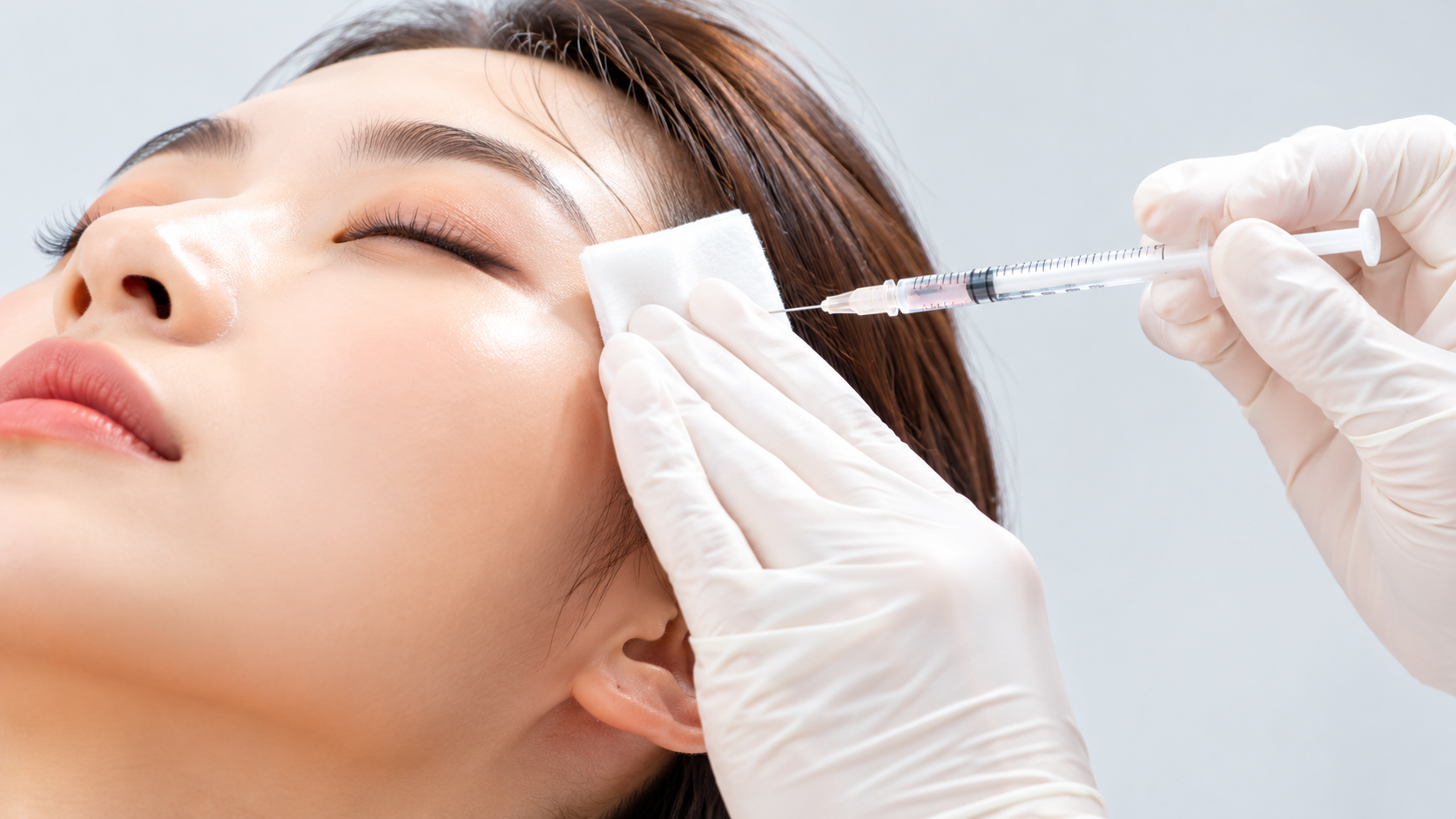
A filler appointment has five stated steps and no surprises in them. The area is cleansed; photographs may be taken with consent; numbing cream or a local anaesthetic may be used if needed; the practitioner injects the product into selected areas using a needle or cannula; and the result is then assessed before aftercare instructions are given.
Stage | What the clinic states |
|---|---|
Appointment length | Around 15–60 minutes, depending on the number of areas and complexity |
Anaesthesia | Little or none; some products contain lidocaine, and topical numbing or local anaesthetic may be used when appropriate |
During treatment | Mild stinging, pinching or pressure during injections |
Immediately after | Most patients resume normal daily activities soon after treatment |
Early recovery | Mild swelling, redness and bruising generally improve over several days; some areas take longer |
First result | Often visible immediately, although swelling may temporarily affect the appearance |
Settled result | Usually easier to assess after about 1–2 weeks, once initial swelling has gone |
Reassessment | The treated area is commonly reviewed after approximately one to two weeks if needed |
Duration | Many hyaluronic-acid fillers last approximately 6–18 months, varying by product, area and individual |
For international patients the clinic's stated planning figures are short: a stay of around 2–3 days may be sufficient for a straightforward treatment, depending on the plan and recovery, and many patients can fly home within 2–3 days if they feel well and have no complications. Confirm both with the treating practitioner before booking, because the one to two week reassessment point falls after most people have already flown home, and it is worth agreeing in advance how that review will happen. If something feels wrong after returning home, patients can reach the clinic's English-speaking counselling manager by phone or email.
Aftercare is short, specific, and mostly about leaving the area alone. Avoid unnecessary pressure, rubbing or massage of the treated area unless specifically advised. Avoid strenuous exercise and excessive heat for the recommended period, use gentle skincare, and attend any recommended follow-up appointment. Seek urgent medical attention if severe pain, unusual skin discoloration or visual symptoms occur.
Combining Dermal Fillers with Other Treatments
Botulinum toxin injections — named by the clinic as a possible combination where clinically appropriate, and the usual partner, because the two address different problems: one reduces muscle activity, the other restores volume.
Selected skin-rejuvenation treatments — named as a possible combination, depending on clinical suitability.
Laser procedures — named as a possible combination, depending on clinical suitability.
Other aesthetic treatments — depending on assessment, with the practitioner deciding suitability, sequence and timing.
The clinic publishes no per-procedure pages for several of these, so they are listed without links rather than linked to pages that do not exist.
Sequencing is a clinical decision rather than a scheduling convenience: the practitioner determines the suitability, sequence and timing of combined procedures according to the patient's goals and safety requirements. Alternatives the clinic names, for concerns a filler does not answer well, include botulinum toxin injections for certain expression-related wrinkles, injectable treatments aimed at skin quality, laser treatments for texture and pigmentation concerns, and surgical options for selected volume or structural concerns. Each addresses a different concern and carries its own benefits, risks and recovery requirements, which is the whole reason the assessment comes before the product.
Safety, Precision, and Clinic Standards
Le.J Plastic Surgery is a Registered Medical Institution for Attracting Foreign Patients, certified by the Ministry of Health and Welfare in compliance with the Medical Overseas Expansion and Foreign Patients Attraction Act. This is a registration for treating international patients; it is not an accreditation of any treatment in this category.
The clinic has not published a risk-reduction protocol specific to this procedure, so none is described here in its place.
The common effects are temporary and local: swelling, bruising, redness, tenderness and pain at the injection site. Beyond those, the clinic lists lumps, asymmetry, infection and delayed inflammatory reactions. The rare and serious ones are the reason this category has published warnings at all — blood vessel blockage, tissue damage and vision loss. The FDA's patient guidance on that point is specific enough to act on: it advises patients to seek immediate medical attention for unusual pain, vision changes, or a white, grey or blue appearance of the skin near the injection site. The same guidance notes that side effects in this category can appear late as well as early, and that lumps or nodules may form weeks, months or years after injection.
The FDA also advises patients not to purchase dermal filler products online, because they could be counterfeit products or products that are not approved for use in the U.S. That is category guidance, and it is the practical reason a patient travelling for treatment should be able to see what is being used and ask about it.
Preparation reduces the ordinary risks and is almost entirely a disclosure exercise. Tell the practitioner about medical conditions, allergies, previous filler treatments, cold sores, medications and supplements. Discuss any medicine that may increase bruising with the prescribing clinician, and do not stop prescribed medication without medical advice. Avoid alcohol, strenuous exercise and non-essential supplements that may increase bruising beforehand, and postpone treatment altogether if there is an active infection in the intended area.
Le.J Plastic Surgery publishes neither case volumes nor complication rates for this procedure, and this page claims neither. That is a fair question at consultation, as is the one worth asking any practitioner in this category: how many of these injections they have performed, how many involved complications, and what follow-up to expect if something goes wrong.
The Bottom Line
Dermal fillers restore volume and soften folds; they do not act on lines caused by muscle movement alone.
Treatment commonly takes around 15–60 minutes, and most patients resume normal activities soon afterwards.
The result is often visible immediately but is best judged after about 1–2 weeks, once swelling has settled.
Many hyaluronic-acid fillers last approximately 6–18 months; the effect is temporary and does not stop aging.
Severe pain, unusual skin discoloration or visual changes after treatment require immediate medical attention.
The clinic publishes no protocol details, no product name, no outcome figures and no price for this service, and none are supplied here.
Frequently Asked Questions
How soon will I see the result, and when should I judge it? Often immediately — but swelling can flatter or distort the first few days, so the result is usually easier to assess after about one to two weeks, once the initial swelling has settled. The clinic commonly reassesses the treated area at that same one-to-two-week point if needed, which is worth noting if you are travelling, since it falls after most patients have flown home.
How long will it last before I need it again? Many hyaluronic-acid fillers last approximately 6–18 months. That is a wide range because longevity depends on the product, the treatment area and individual factors; some fillers last longer and some for a shorter period. Ask which product is being used and what its expected duration is, since that answer is specific to the syringe rather than to the category.
Does it hurt, and will I be numbed? Usually little or no anaesthesia is required. Some products contain lidocaine to reduce discomfort, and topical numbing cream or local anaesthetic may be used when appropriate. Most patients describe mild stinging, pinching or pressure during the injections rather than pain.
What could go wrong, and what counts as an emergency? Commonly: temporary swelling, bruising, redness, tenderness and pain at the injection site. Less commonly: lumps, asymmetry, infection and delayed inflammatory reactions, which can appear weeks, months or years later. Rarely and seriously: blood vessel blockage, tissue damage and vision loss. Severe pain, unusual skin discoloration, or any visual change after treatment needs immediate medical attention — not a wait-and-see.
Who should not have filler, or should wait? Anyone with an active infection or inflammation in the intended area, a known allergy to the proposed product, or certain uncontrolled medical conditions. Pregnancy and breastfeeding are generally reasons to postpone elective treatment, because safety information is limited. Bleeding disorders, significant allergies and medications affecting treatment safety all require a medical assessment first.
How long should I stay in Korea, and when can I fly home? A stay of around 2–3 days may be sufficient for a straightforward treatment, depending on your plan and recovery, and many patients fly home within 2–3 days if they feel well and have no complications. Confirm the timing with the practitioner before departure, and agree before you leave how any follow-up review will be handled once you are home.
Book a Consultation at Le.J Plastic Surgery

Dermal filler treatment is offered at Le.J Plastic Surgery in Gangnam-gu, Seoul by Dr. Kim Ji Sun, within the clinic's Skin Care range. Because the right answer depends on which part of the face is being discussed and what lies under it, the consultation is where it is established whether filler is the treatment for the concern you arrived with. Consultations run Monday to Friday, 10:00–19:00 KST, and Saturday from 10:00 KST. International enquiries are handled by the clinic's counseling manager, Park Somi, and English-language support is available. You can use the clinic's contact page, by phone on +82-2-516-7153, or by email at info@lejplasticsurgery.com.
Disclaimer
This page is for general information only and is not medical advice. Individual results vary and cannot be guaranteed. Suitability for any procedure can only be determined through an in-person medical consultation with a qualified doctor.
Sources & Further Reading
Ready for a Personalized 1:1 Consultation?
Dr. Kim Ji Sun personally conducts every consultation, surgical plan, and follow-up at Le.J Plastic Surgery in Gangnam, Seoul.