Personalized Rhinoplasty & Facial Aesthetics in Gangnam, Seoul · Tel: +82-2-6954-1988
en-US
CLINICAL SPECIALTY
Rhinoplasty
Rhinoplasty in Seoul at Le.J Plastic Surgery reshapes the nasal bridge and tip with closed, autologous-cartilage techniques by a board-certified ENT.

Rhinoplasty in Seoul: Nose Reshaping Surgery at Le.J Plastic Surgery

Medically reviewed by Dr. Kim Ji Sun, M.D., M.S., Ph.D., Board-Certified Otolaryngologist · Le.J Plastic Surgery, Gangnam-gu, Seoul
Rhinoplasty is a surgery that reshapes the nose from the bridge to the tip, considering nasal function alongside facial proportions. At Le.J Plastic Surgery in Gangnam, Seoul, it is planned around your individual nasal anatomy rather than a single house style, and most techniques used here work through a closed approach, the patient's own cartilage, or both. Every procedure is performed by Dr. Kim Ji Sun, a board-certified otolaryngologist with 20 years of experience and more than 4,000 clinical cases.
What Is Rhinoplasty?
Rhinoplasty is a surgical procedure that reshapes the nasal bridge, tip, or nostril area while taking breathing function and overall facial balance into account.
It addresses the nose as a structure, not only a surface: the bridge, the tip and the nostril base can each be adjusted, separately or together.
Patients request it to improve facial balance, refine the nasal bridge or tip, reduce wide or flared nostrils, correct nostril retraction, address nasal asymmetry, or improve structural problems affecting breathing.
At this clinic, most techniques use autologous cartilage — the patient's own tissue, taken from the septum, ear or rib — rather than artificial implants.
Most of the clinic's approaches are closed, meaning no incision is made across the columella under the nose.
Sleep anesthesia (sedation) is used so the patient remains relaxed and comfortable during the procedure.
The distinction between a cosmetic and a functional goal matters less in planning than patients often expect, because the same structures carry both. A bridge that is reshaped without regard to the airway can look improved and breathe worse. This is why the clinic's assessment looks at nasal anatomy, facial proportions and functional factors together before any technique is selected, and why pre-operative 3D-CT and high-resolution endoscopic analysis are used when the anatomy calls for it.
Perfect facial symmetry is not a realistic expectation, and results vary by anatomy. What rhinoplasty can reasonably offer is improved nasal contour, a refined tip or bridge, adjusted nostril proportion, and better overall facial harmony, with nasal function considered during planning. Among patients travelling from the United States, the most frequently stated goal is a natural-looking result that keeps the face recognisably their own — a goal that is served by restraint in the surgical plan rather than by the extent of the change.
Who Performs Rhinoplasty at Le.J Plastic Surgery
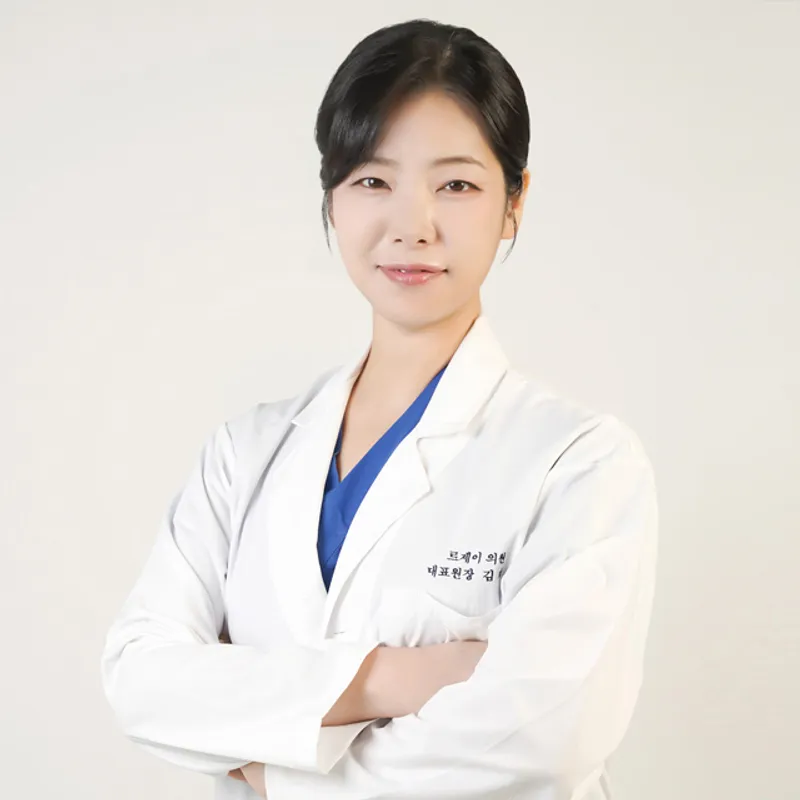
Dr. Kim Ji Sun, M.D., M.S., Ph.D.
Board-certified Otorhinolaryngologist
All rhinoplasty at Le.J Plastic Surgery is performed by Dr. Kim Ji Sun, the clinic's Medical Director and a board-certified otolaryngologist. She earned her M.D., master's degree and Ph.D. at Dankook University College of Medicine, completed her internship and residency at Dankook University Hospital, and trained as a clinical fellow in the Department of Otorhinolaryngology at Asan Medical Center in Seoul.
Her background is specifically a nasal one, which is the relevant question for this page rather than general surgical seniority. She has served as a Former Professor at Nowon Eulji University Hospital and as a Guest Professor at Stanford University School of Medicine. Within the Korean Academy of Facial Plastic and Reconstructive Surgery she is a regular member and director, and sits on its academic, public-relations and international committees; within the Korean Rhinological Society she sits on the academic and medical-ethics committees. She is also a member of the Korean Society of Otorhinolaryngology, where she has served on the exam-item development committee, the Korean Society for Aesthetic Surgery, and the international bodies PAAFPRS and IFFPSS.
She has authored a rhinoplasty book for the Korean Rhinological Society, Rhinoseptoplasty, and contributed to the Korean Academy of Facial Plastic and Reconstructive Surgery textbook. Between 2020 and 2022 she was course director of the KSFPRS rhinoplasty hands-on course. She has given live rhinoplasty lectures and demonstrations in 2021, 2025 and 2026, including an invited lecture on functional rhinoplasty at a Seoul National University Hospital rhinoplasty workshop in 2021, and a 2026 lecture on non-surgical facial rejuvenation and closed rhinoplasty at the 12th Korean Academy of Facial Plastic and Reconstructive Surgery meeting.
Her stated technique focus is narrow and matches what this page describes: the CellFix method of injecting finely minced autologous cartilage into the nasal tip through a closed approach; non-implant rhinoplasty using autologous cartilage from the nasal dorsum to the tip; the use of septal, ear and costal cartilage as graft sources; and hyperbaric oxygen therapy as part of post-operative recovery.
In her own words: "Customized surgery means preserving function while understanding each person's facial anatomy." Consultations are available Monday to Friday, 10:00–19:00 KST, and Saturday from 10:00 KST, with English-language support provided through the clinic's counseling manager for international patients.
Rhinoplasty Options / Types Available
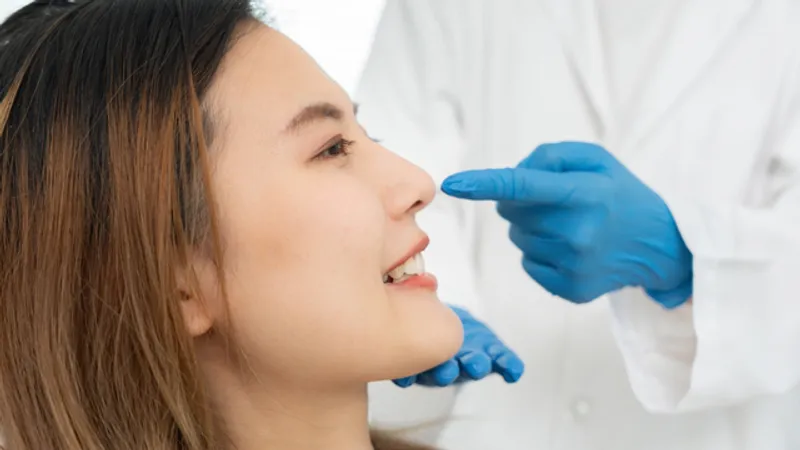
Le.J Plastic Surgery offers six distinct nasal procedures. Which one applies depends on your anatomy and goals, and the choice is made at consultation rather than in advance.
Procedure | What it addresses | Distinguishing feature |
|---|---|---|
Nasal tip height and definition | Finely minced autologous cartilage injected into the tip; height adjustable in pixel-level increments; closed approach | |
Bridge and tip reshaping | No incision under the nose | |
Bridge-to-tip reshaping without artificial implants | Autologous cartilage from nasal dorsum to tip | |
Wide or flared nostrils | Nostril-base narrowing | |
Excessive nostril exposure | Dermal grafting to lower the retracted rim | |
Bridge augmentation | Implant-based option where autologous tissue is not indicated |
Autologous cartilage can be taken from three sources — septal, ear, or costal (rib) cartilage — and the source is selected according to how much structural support the plan requires. Septal cartilage is taken from within the nose itself; ear cartilage offers a curved, more flexible graft; rib cartilage provides the greatest volume and rigidity. The choice is a structural one, decided by what the reconstruction has to hold in place over time, not by patient preference.
The difference between the closed and open approaches is likewise structural rather than cosmetic. In a closed approach no incision crosses the columella, the strip of skin between the nostrils; an open approach lifts that skin to expose the framework directly. Each gives the surgeon a different balance between visibility and disturbance of the tissue. Where anatomy calls for it, alternatives to any of the six procedures include non-surgical options or an open rhinoplasty approach, and a patient whose primary concern is functional may be better served by assessment focused on the airway.
Who Is a Good Candidate for Rhinoplasty?
Individuals who have completed facial growth.
Individuals who are physically healthy.
Individuals who do not smoke.
Individuals with realistic expectations about the results.
Those who wish to reshape the nasal bridge or tip.
Those who wish to reduce wide or flared nostrils.
Those who wish to correct excessive nostril exposure.
Candidacy also depends on individual nasal anatomy and the surgeon's assessment. Rhinoplasty may be unsuitable, or may need to be postponed, for patients with uncontrolled medical conditions, bleeding disorders, active infections, significant wound-healing problems, or unrealistic expectations. Obstructive sleep apnea requires special consideration. A previous nasal procedure does not by itself rule out surgery, but it changes the assessment, and it should be raised at the first consultation rather than later.
What to Expect: Procedure, Recovery, and Results Timeline
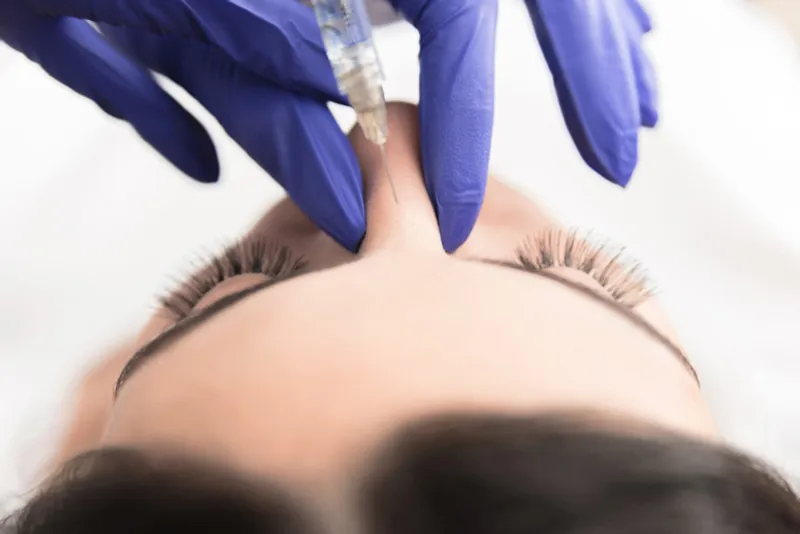
Consultation begins with a review of your medical history, current medications and supplements, any previous nasal procedures, your aesthetic goals, and any breathing concerns. Physical examination then assesses nasal anatomy, facial proportions and functional factors. Where needed, the clinic uses pre-operative 3D-CT and high-resolution endoscopic analysis. An individualized surgical plan is prepared from that assessment.
Preparation is mostly disclosure. Provide a complete medical history, a full medication and supplement list, details of any previous nasal surgery, allergies, and any breathing concerns. You may be instructed to stop smoking and to avoid aspirin, certain anti-inflammatory medicines, or herbal supplements that can increase bleeding risk. Do not stop any prescribed medication on your own — discuss it with the medical team, along with instructions on fasting and on arrangements for postoperative care.
The procedure itself follows a defined sequence: review history and goals, examine nasal structure and facial proportions, select the appropriate technique, reshape the bridge, tip or nostril area as indicated, then provide postoperative wound care, disinfection and swelling management. Operating time ranges from one to three hours for tip techniques, and up to one hour for non-implant work, varying by technique and complexity; the individual service page for your procedure carries its own estimate.
Stage | What happens |
|---|---|
Around day 3 | Taping may be removed after closed rhinoplasty or alar reduction |
Within 5–7 days | Stitches may be removed, depending on the procedure |
Around days 7–10 | Typical length of stay in Korea for follow-up and initial recovery |
Following weeks | Swelling decreases progressively |
Several months | Nasal contours continue to refine |
12–18 months | Final results may take this long to fully develop |
Patients travelling for surgery should generally plan to stay in Korea for approximately 7 to 10 days, covering the postoperative appointments and the earliest part of recovery. Flying home is possible once the surgeon confirms you are fit to travel, usually within that window, though the timing depends on healing and on the postoperative assessment rather than on the calendar. Obtain that approval before flying or resuming strenuous activity.
Recovery varies by procedure and by individual healing. Common temporary effects include swelling, bruising, nasal congestion, tenderness, and changes in skin sensation. Follow the clinic's instructions for wound care, disinfection, taping, stitch removal and swelling management, and attend the scheduled postoperative reviews. For patients returning to another country, agree before you leave how follow-up will work across time zones, and what to do if a concern arises after you are home.
Potential risks include swelling, bruising, infection, bleeding, anesthesia-related complications, changes in skin sensation, breathing difficulties, septal perforation, poor wound healing, scarring, unsatisfactory appearance, cartilage-graft resorption or shifting, asymmetry, and the possibility of revision surgery. Cartilage-graft resorption and shifting are specific to autologous techniques and are part of why the graft source is chosen structurally.
Combining Rhinoplasty with Other Treatments
Bridge and tip reshaping can be combined with dermal grafting, or with facial lifting procedures, where appropriate for the individual plan. The clinic's Facial Lifting & Contouring treatments are the usual pairing when a patient's goals extend beyond the nose, and for patients travelling a long distance a combined plan can reduce the number of trips. Hyperbaric oxygen therapy is used at this clinic as part of post-operative recovery. Whether any combination is suitable is decided at consultation, based on anatomy and recovery capacity rather than on preference alone — combining procedures lengthens the operating time and the recovery, and that trade-off belongs in the consultation.
Safety, Precision, and Clinic Standards
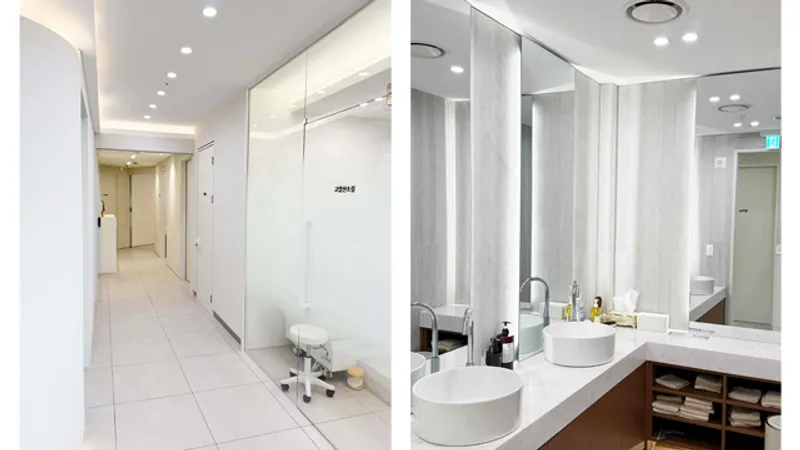
Le.J Plastic Surgery identifies 3D-CT and high-resolution endoscopy as part of its safety and assessment equipment. Dr. Kim Ji Sun is a board-certified otolaryngologist — a specialist qualification in the ear, nose and throat field within which rhinoplasty sits. The clinic holds Business Registration Number 128-57-00904 and is a Registered Medical Institution for Attracting Foreign Patients, registered with the Ministry of Health and Welfare under the Medical Overseas Expansion and Foreign Patients Attraction Act. That is a foreign-patient registration, not an accreditation of the facility.
Professional guidance for this field is public, and reading it alongside a consultation is a reasonable way to check what any clinic tells you. The AAO-HNS Foundation publishes a clinical practice guideline on improving nasal form and function after rhinoplasty. The American Society of Plastic Surgeons and the UK's National Health Service both publish patient-facing material setting out what the procedure involves, what recovery is like, and what can go wrong. ENT Health, the patient-information service of the AAO-HNS Foundation, publishes a list of questions rhinoplasty patients commonly ask. On the category itself the NHS is direct: nose reshaping is a complex operation, the results cannot be guaranteed, there are risks to consider, and it can be expensive.
For patients arranging treatment from abroad, verification is a practical step rather than a formality. A surgeon's specialist qualification and training can be checked; a clinic's registration can be checked through the Medical Korea registration system operated under the Ministry of Health and Welfare. Before-and-after photographs are most informative when they show anatomy comparable to your own. Questions about anesthesia — which agent, who monitors it — and about who answers questions during recovery have concrete answers, and a consultation is the place to get them.
The Bottom Line
Rhinoplasty reshapes the nose from bridge to tip, with nasal function considered alongside appearance.
Le.J Plastic Surgery offers six nasal procedures; most use a closed approach, the patient's own cartilage, or both.
All procedures are performed by Dr. Kim Ji Sun, a board-certified otolaryngologist with 20 years of experience and 4,000+ clinical cases.
Plan roughly 7–10 days in Korea; taping comes off around day 3 and stitches within 5–7 days, but final contour can take 12–18 months.
Perfect symmetry is not a realistic goal; candidacy and technique are decided at consultation after examination.
Frequently Asked Questions
Does rhinoplasty at Le.J Plastic Surgery require an incision under the nose? Most of the clinic's techniques do not. Cell Fix™ Nose, closed rhinoplasty and non-implant rhinoplasty all use a closed approach, which means no incision is made across the columella under the nose. Open rhinoplasty remains an alternative where anatomy requires it, and that decision is made during consultation after examination.
Will an artificial implant be placed in my nose? Not in most of the clinic's procedures. The techniques here are built around autologous cartilage — your own tissue, taken from the septum, ear or rib. 3D silicone rhinoplasty is the implant-based option, used where autologous tissue is not indicated.
What anesthesia is used, and will it hurt? Sleep anesthesia, a form of sedation, is used to keep you relaxed and comfortable during the procedure. Afterwards, some discomfort, swelling or soreness may occur during recovery, and the clinic provides swelling management as part of aftercare.
How many days should I plan to stay in Korea? Approximately 7 to 10 days is the general plan for rhinoplasty, covering follow-up appointments and the initial part of recovery. Your own schedule depends on which procedure you have and on how healing progresses, so treat the range as a planning figure rather than a fixed discharge date.
When can I fly home? Once the surgeon confirms you are fit to travel, which is usually within that 7-to-10-day window. The timing depends on healing and postoperative assessment. Get the surgeon's approval before flying, and before resuming strenuous activity.
When will I see the final result? Swelling decreases progressively over the weeks and months after surgery, and nasal contours continue refining for several months. Final results may take 12 to 18 months to fully develop.
Who is not a suitable candidate? Rhinoplasty may be unsuitable or require postponement for patients with uncontrolled medical conditions, bleeding disorders, active infections, significant wound-healing problems, or unrealistic expectations. Obstructive sleep apnea requires special consideration. Candidates should also have completed facial growth and should not smoke.
Can rhinoplasty improve my breathing? Nasal function is considered during surgical planning, and patients do request rhinoplasty partly to address structural problems affecting breathing. Whether your own breathing can be improved depends on your anatomy and is assessed at examination, with 3D-CT and endoscopic analysis used where needed.
Book a Consultation at Le.J Plastic Surgery
Rhinoplasty at Le.J Plastic Surgery in Gangnam, Seoul begins with an individual assessment of your nasal anatomy and facial proportions, not with a technique chosen in advance. Consultations run Monday to Friday, 10:00–19:00 KST, and Saturday from 10:00 KST. International enquiries are handled by the clinic's counseling manager, Park Somi, and English-language support is available. If you are travelling from abroad, arrange the consultation ahead of your trip so the schedule can be planned around the full course of treatment and follow-up. You can use the clinic's contact page, by phone at +82-2-516-7153 or by email at info@lejplasticsurgery.com.
Disclaimer
This page is for informational purposes only and does not constitute medical advice. Individual results vary. Consult a qualified medical professional about your own circumstances before making any treatment decision.
Sources & Further Reading
Ready for a Personalized 1:1 Consultation?
Dr. Kim Ji Sun personally conducts every consultation, surgical plan, and follow-up at Le.J Plastic Surgery in Gangnam, Seoul.