Personalized Rhinoplasty & Facial Aesthetics in Gangnam, Seoul · Tel: +82-2-6954-1988
en-US

CLINICAL SPECIALTY
Facial Lifting & Contouring
Facial lifting and contouring at Le.J Plastic Surgery in Seoul: endoscopic forehead lifting, fat grafting, Ultherapy PRIME, Thermage FLX and Titanium.

Facial Lifting & Contouring in Seoul at Le.J Plastic Surgery

Medically reviewed by Dr. Kim Ji Sun, M.D., M.S., Ph.D., Board-Certified Otolaryngologist · Le.J Plastic Surgery, Gangnam-gu, Seoul
Facial lifting and contouring covers the surgical and non-surgical treatments used to address sagging, loss of facial definition and changes in facial volume. At Le.J Plastic Surgery in Gangnam, Seoul, it is not a single operation but a group of five treatments — one surgical lift, one volume procedure using your own tissue, and three device-based treatments — selected after an assessment of your skin elasticity, facial structure and degree of laxity. Every procedure is performed by Dr. Kim Ji Sun, a board-certified otolaryngologist with 20 years of experience and more than 4,000 clinical cases.
What Is Facial Lifting & Contouring?
Facial lifting and contouring is the category of treatments that reposition or tighten facial tissue, restore lost volume, and improve the definition of the jawline and midface.
It addresses three different problems that often appear together: tissue that has descended, skin that has lost firmness, and volume that has been lost from the temples, forehead or midface.
The category spans surgery and non-surgery. Surgical lifting generally addresses more pronounced sagging than non-surgical treatment does.
Patients request it for sagging cheeks, jowls, loose skin, a less-defined jawline, a flat forehead or hollow temples.
No treatment in this category stops natural ageing, and none guarantees perfect symmetry.
Which treatment suits you depends on skin elasticity, facial structure, the degree of laxity and your own goals — not on a preferred house technique.
That last point is the practical reason this page describes a category rather than a procedure. A patient with early jawline softening and good skin elasticity and a patient with a descended brow and deep forehead furrows are both asking for a lift, but almost nothing about their treatment plans overlaps. The NHS makes the same point from the opposite direction in its guidance on surgical face lifting, noting that results cannot be guaranteed and that the decision warrants being sure of your reasons beforehand.
Who Performs Facial Lifting & Contouring at Le.J Plastic Surgery
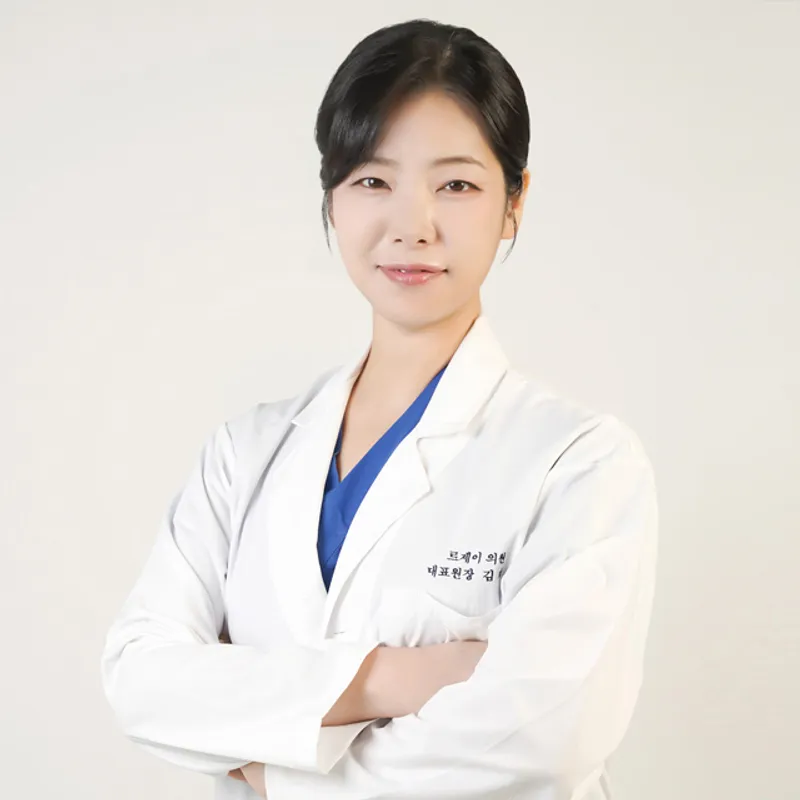
Dr. Kim Ji Sun, M.D., M.S., Ph.D.
Board-certified Otorhinolaryngologist
Every facial lifting and contouring procedure at Le.J Plastic Surgery is performed personally by Dr. Kim Ji Sun, the clinic's founder and Medical Director.
Dr. Kim is a board-certified otolaryngologist who earned an M.D., a Master's degree and a Ph.D. from Dankook University College of Medicine, completed internship and residency at Dankook University Hospital, trained as a Clinical Fellow in the Department of Otorhinolaryngology at Asan Medical Center, and has served as a Guest Professor at Stanford University School of Medicine in the United States.
Forehead lift surgery and fat grafting are both listed among Dr. Kim's core specialisations, alongside rhinoplasty and stem cell therapy. The most recent relevant academic activity is a 2026 presentation on non-surgical facial rejuvenation at the 12th Korean Academy of Facial Plastic and Reconstructive Surgery meeting, which covers the device-based half of this category rather than the surgical half.
Le.J Plastic Surgery is a single-doctor clinic, so the surgeon who assesses you is the surgeon who treats you. That matters more in this category than in most, because the assessment decides whether you are offered surgery or a device, and those two answers come from the same person in the same consultation.
Facial Lifting & Contouring Options / Types Available
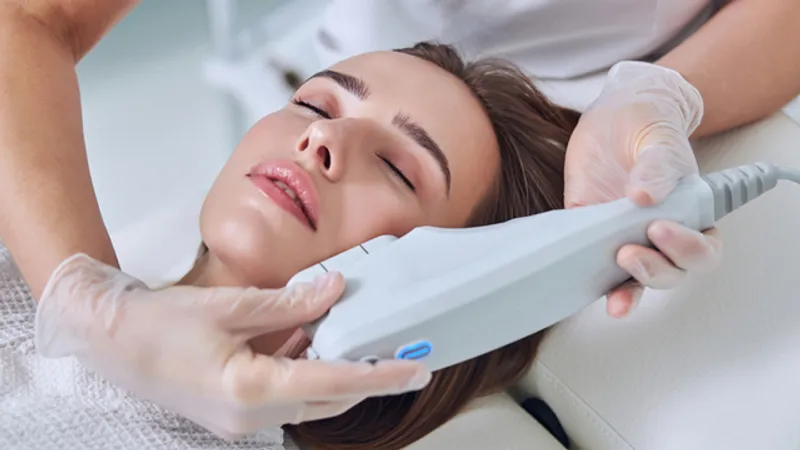
The clinic offers five treatments in this category. They are not interchangeable, and they are not ranked — each addresses a different problem.
Treatment | Type | Session time | What it addresses |
|---|---|---|---|
Surgical | Approximately 1–2 hours | Descended forehead tissue, low or sagging eyebrows, frown lines and forehead furrows | |
Surgical | Approximately 1 hour | Hollow temples, a flat forehead, lost facial volume, angular contours | |
Non-surgical, ultrasound | Approximately 30–90 minutes | Mild to moderate skin laxity, softening along the jawline | |
Non-surgical, radiofrequency | Approximately 30–60 minutes | Mild-to-moderate laxity, early sagging, fine lines and wrinkles | |
Non-surgical, laser | Approximately 30–60 minutes | Blurred facial contours, a less-defined jawline, lifting with a brightening effect |
Endoscopic forehead lifting raises descended forehead tissue and repositions the eyebrows through several small incisions hidden within the hair-bearing scalp, using a small camera and surgical instruments to release and elevate the tissue. The American Society of Plastic Surgeons describes the same endoscopic approach for this category: an endoscope and specialised instruments inserted through small incisions made within the hairline, with the incisions then closed using sutures, skin adhesives or clips. Sedation is required.
Fat grafting uses fat harvested from your own body to restore volume and soften angular contours. Fat is taken from a suitable donor area by liposuction, processed, and injected into the selected facial areas in small amounts. Sedation anaesthesia is used, and the procedure takes approximately one hour.
The three device treatments work by different physical mechanisms. Ultherapy PRIME® delivers microfocused ultrasound energy with real-time imaging that lets the practitioner visualise tissue layers while treating. Thermage FLX® uses monopolar radiofrequency to heat deeper skin layers, with cooling features intended to improve surface comfort. Titanium® is a laser system that, according to the clinic's own description of the equipment, uses three wavelengths — 755 nm, 810 nm and 1064 nm — with sapphire contact cooling and separate modes for lifting, contouring, tightening and skin tone.
Who Is a Good Candidate for Facial Lifting & Contouring?
Suitable candidates:
Adults who want to improve facial sagging, contour or volume balance, and who hold realistic expectations about what each treatment can change.
For surgery: patients in generally good health who are able to heal appropriately.
For the device treatments: patients whose laxity is still in the mild-to-moderate range. Firmness that has begun to go, and a jawline that has started to soften, are what these treatments are for; advanced descent is not.
For endoscopic forehead lifting specifically: adults with low or sagging eyebrows, forehead descent, prominent frown lines, or upper-eyelid hooding partly caused by a low brow.
For fat grafting specifically: patients with localised facial volume loss or contour irregularities and sufficient donor fat.
Who should postpone or be assessed further:
People with uncontrolled medical conditions, active infections, or significant wound-healing problems.
People with medical issues that increase procedural risk, including anaesthesia risk for the surgical options.
Patients who smoke, which may increase surgical risks.
For the device treatments: anyone with an open wound, active skin infection or significant inflammation in the treatment area, and anyone who is pregnant. Implants in the treatment area require assessment against the device instructions.
Anyone seeking a surgical-level change from a non-surgical treatment. This is a mismatch of expectation rather than a medical contraindication, but it produces the same outcome — the treatment does not do what the patient wanted.
The American Academy of Dermatology frames the category-wide limit plainly: non-surgical tightening procedures produce modest tightening and lifting, and their appeal lies in leaving the skin intact rather than in matching what surgery achieves.
What to Expect: Procedure, Recovery, and Results Timeline
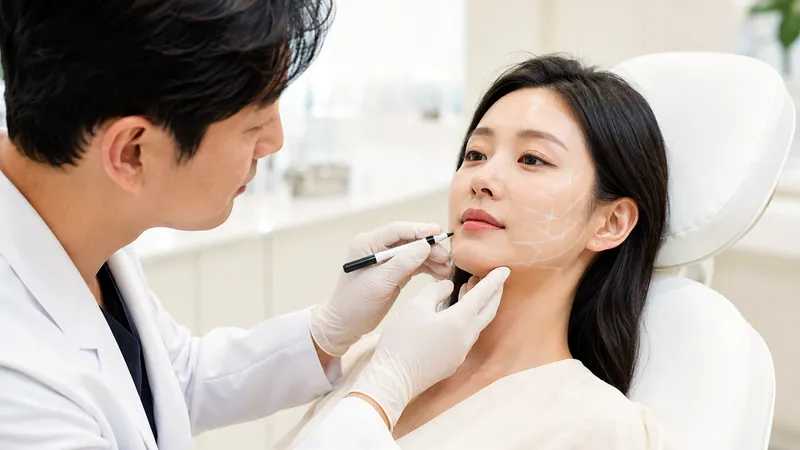
Planning begins with a consultation in which the clinician assesses facial proportions, skin quality, tissue laxity, fat distribution and facial symmetry, and reviews your medical history, medications and expectations. Available options, expected outcomes, risks, recovery requirements and costs are discussed before an individual plan is agreed.
For the category as a whole the clinic gives a treatment duration of 40–50 minutes across 2 sessions, which reflects the device treatments that make up most of its volume. The surgical options run longer and are planned separately.
Treatment | Recovery | When results appear |
|---|---|---|
Endoscopic Forehead Lifting | Commonly around 10–14 days | Around 10–14 days, with tissue settling continuing for several months |
Fat Grafting | Commonly around 7–14 days | Initial results within 7–14 days; more stable over 3–6 months |
Ultherapy PRIME® | Many patients resume normal activities soon after | Gradually over 2–3 months as collagen remodelling progresses |
Thermage FLX® | Normal daily activities resumed soon after | Some initial tightening, developing over the following weeks to months |
Titanium® | Minimal; most patients return to daily activities straight away | Approximately 5–6 days, with three treatments usually spaced three to four weeks apart |
If you are travelling to Korea for treatment, the clinic's own planning figures differ sharply between the two halves of this category: allow 1–2 days for non-surgical lifting, and approximately 10–14 days for surgical forehead lifting, covering initial healing and postoperative assessment. The same ranges apply to flying home.
What to expect afterwards depends on which treatment you had. Temporary swelling, bruising, tenderness and changes in sensation are common across the category. After surgery, visible swelling and bruising commonly persist for one to two weeks, while residual swelling and tissue healing may continue for several months. After the device treatments, redness, swelling and tenderness are the usual effects and generally settle quickly.
Risks are also treatment-specific. Surgical risks include bleeding, infection, poor wound healing, scarring, fluid accumulation, nerve injury, asymmetry and anaesthesia-related complications; forehead lifting carries the additional possibility of hair loss near the incisions and changes in brow movement. Fat grafting carries risks of fat necrosis, oil cysts, contour irregularities, under-correction and the need for revision, and some of the transferred fat is naturally reabsorbed. The device treatments carry their own profile, including burns, blistering, textural irregularities, pigment changes and nerve-related symptoms, which is why skin-tone assessment and parameter selection matter for the laser and radiofrequency options.
Aftercare follows the same logic. For surgery: wound care, dressings, prescribed medication, sleeping position and activity restrictions, with strenuous exercise deferred until cleared and healing skin protected from sun exposure. For the device treatments: gentle skincare, moisturisation and sun protection, avoiding irritating products or further procedures until advised. In both cases, severe or worsening pain, sudden swelling, fever, blistering or persistent numbness warrants prompt medical assessment rather than waiting for the next scheduled visit.
Combining Facial Lifting & Contouring with Other Treatments
Brow and forehead lifting may be combined with upper or lower eyelid surgery, facelift or neck lift procedures, or selected skin-resurfacing procedures, where clinically appropriate. Fat grafting may be combined with selected facial procedures depending on anatomy and the surgical plan, including a facelift or eyelid surgery. Thermage and Titanium® may both be considered alongside other aesthetic treatments, though suitability, sequencing and timing depend on which procedures are involved.
Two limits, stated rather than glossed. The clinic has not confirmed a combination protocol of its own for this specialty or for Ultherapy PRIME®, so no clinic-specific sequencing is claimed here — combination planning is a consultation question. The clinic publishes no per-procedure pages for these, so they are listed without links rather than linked to pages that do not exist.
Patients also ask how the three device treatments compare with each other. They are genuinely alternatives rather than a sequence: the clinic lists Ultherapy, Thermage and Titanium laser lifting as the lifting treatments it offers, notes that they use different technologies, and states that comfort, suitability and expected results vary between them. Which one is appropriate depends on the treatment area, the severity of laxity, your anatomy and the degree of change you want.
Safety, Precision, and Clinic Standards
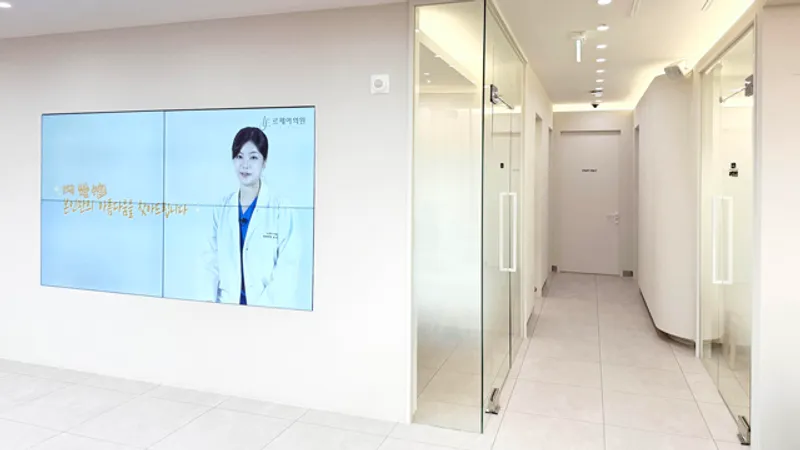
Le.J Plastic Surgery is a Registered Medical Institution for Attracting Foreign Patients, certified by the Ministry of Health and Welfare in compliance with the Medical Overseas Expansion and Foreign Patients Attraction Act. This is a registration for treating international patients; it is not an accreditation of any treatment in this category.
The clinic's stated quality process begins with preoperative assessment of individual anatomy and facial proportions before any surgical planning, uses diagnostic imaging — 3D CT imaging and endoscopy — where appropriate, and tailors technique selection to the patient's anatomy and goals rather than to a standard protocol. Postoperative monitoring follows, and the clinic's recovery facilities include hyperbaric oxygen equipment.
For the device treatments, the safety mechanism is different and sits in the equipment itself. Ultherapy PRIME® incorporates real-time ultrasound imaging that allows the practitioner to see the tissue layers being targeted during treatment. Thermage FLX® incorporates cooling and treatment-delivery features aimed at surface comfort, and Titanium® uses sapphire contact cooling. For laser treatment in particular, the clinic identifies accurate skin-tone assessment and appropriate parameter selection as the controls that matter, since excessive energy applied to unintended areas is what produces pigmentary change and burns.
Le.J Plastic Surgery publishes neither case volumes nor complication rates for this specialty, and this page claims neither. It has also not published a risk-reduction protocol specific to the category. Both are fair questions at consultation.
The Bottom Line
Facial lifting and contouring at Le.J Plastic Surgery is five distinct treatments — one surgical lift, one autologous volume procedure, and three device-based treatments — not one operation.
Surgical lifting addresses more pronounced sagging; the device treatments suit mild to moderate laxity and produce a modest, gradual change.
All five are performed by Dr. Kim Ji Sun, a board-certified otolaryngologist with 20 years of experience and 4,000+ clinical cases.
Plan 1–2 days in Korea for non-surgical lifting and approximately 10–14 days for surgical forehead lifting.
No treatment here stops ageing or guarantees symmetry; which one suits you is decided at consultation after examination, not in advance.
Frequently Asked Questions
Do I need surgery, or will a device treatment be enough? That is the central question of the consultation, and it is decided by examination rather than preference. The practical dividing line is how far the laxity has gone: the three device treatments are intended for the mild-to-moderate range, while more pronounced descent is generally the territory of surgical lifting. A patient who wants a surgical-level change from a device treatment will not get it, which is why the assessment comes first.
How long do I need to stay in Korea? It depends entirely on which half of the category you are treated in. For non-surgical lifting the clinic suggests allowing 1–2 days; for surgical forehead lifting, approximately 10–14 days, to cover initial healing and postoperative assessment. The same figures apply to when you can fly home, assuming you feel well and have no concerning symptoms.
Will I be asleep during the procedure? Anaesthesia depends on the treatment. Endoscopic forehead lifting and fat grafting both require sedation. For Ultherapy PRIME®, Thermage FLX® and Titanium®, the clinic offers both non-sedated and sedated options depending on the patient and the plan.
What does Titanium® actually do that the other two devices do not? It is a laser rather than an ultrasound or radiofrequency device, and the clinic positions it as producing an effect noticeable immediately after treatment and maintained afterwards, with lifting, contouring, tightening and skin-tone modes. Results are described at approximately 5–6 days, and it is usually given as three treatments spaced three to four weeks apart — a different rhythm from the single-session devices.
How much of a fat graft survives? Some of the transferred fat is naturally reabsorbed, and how much survives varies with the treatment area and individual healing. Repeat treatment may be needed to reach or maintain the volume you want. This is a known characteristic of the technique rather than a complication, and it is worth discussing before surgery rather than after.
Is the result permanent? No treatment in this category stops ageing. Surgical results can last for years while ageing continues around them; non-surgical results vary by technique and may need repeating. The clinic does not publish a single duration figure for the category, because none applies across five different treatments.
What should I tell the clinic before treatment? Your full medical history, including medications, supplements, allergies, previous facial procedures and smoking history. For the device treatments, also mention any implants, recent skin treatments or skin problems in the intended treatment area, and any possibility of pregnancy. Do not stop prescribed medicines without medical advice.
Book a Consultation at Le.J Plastic Surgery
Facial lifting and contouring at Le.J Plastic Surgery in Gangnam, Seoul begins with an assessment of your facial proportions, skin quality and tissue laxity — the step that decides which of the five treatments, if any, is appropriate. Consultations run Monday to Friday, 10:00–19:00 KST, and Saturday from 10:00 KST. International enquiries are handled by the clinic's counseling manager, Park Somi, and English-language support is available. If you are travelling from abroad, arrange the consultation ahead of your trip so the schedule can account for the difference between a 1–2 day non-surgical visit and a 10–14 day surgical stay. You can use the clinic's contact page, by phone at +82-2-516-7153 or by email at info@lejplasticsurgery.com.
Disclaimer
This page is for general information only and is not medical advice. Individual results vary and cannot be guaranteed. Suitability for any procedure can only be determined through an in-person medical consultation with a qualified doctor.
Sources & Further Reading
Ready for a Personalized 1:1 Consultation?
Dr. Kim Ji Sun personally conducts every consultation, surgical plan, and follow-up at Le.J Plastic Surgery in Gangnam, Seoul.