Personalized Rhinoplasty & Facial Aesthetics in Gangnam, Seoul · Tel: +82-2-6954-1988
en-US

CLINICAL PROCEDURE GUIDE
Titanium®
Titanium® at Le.J Plastic Surgery in Gangnam, Seoul is a non-surgical laser lifting treatment using three wavelengths through one applicator.

Titanium® Lifting in Seoul at Le.J Plastic Surgery

Medically reviewed by Dr. Kim Ji Sun, M.D., M.S., Ph.D., Board-Certified Otolaryngologist · Le.J Plastic Surgery, Gangnam-gu, Seoul
Titanium® is a non-surgical lifting treatment. The clinic describes its positioning as a lifting treatment intended to provide effects immediately after the procedure and through the maintenance period. At Le.J Plastic Surgery in Gangnam-gu, Seoul, it sits within the clinic's non-surgical lifting programme as the laser-based option in the clinic's facial lifting and contouring range, and it is performed personally by Dr. Kim Ji Sun, the clinic's founder and Medical Director and the listed performing doctor for the parent Facial Lifting & Contouring specialty.
What Is Titanium®?
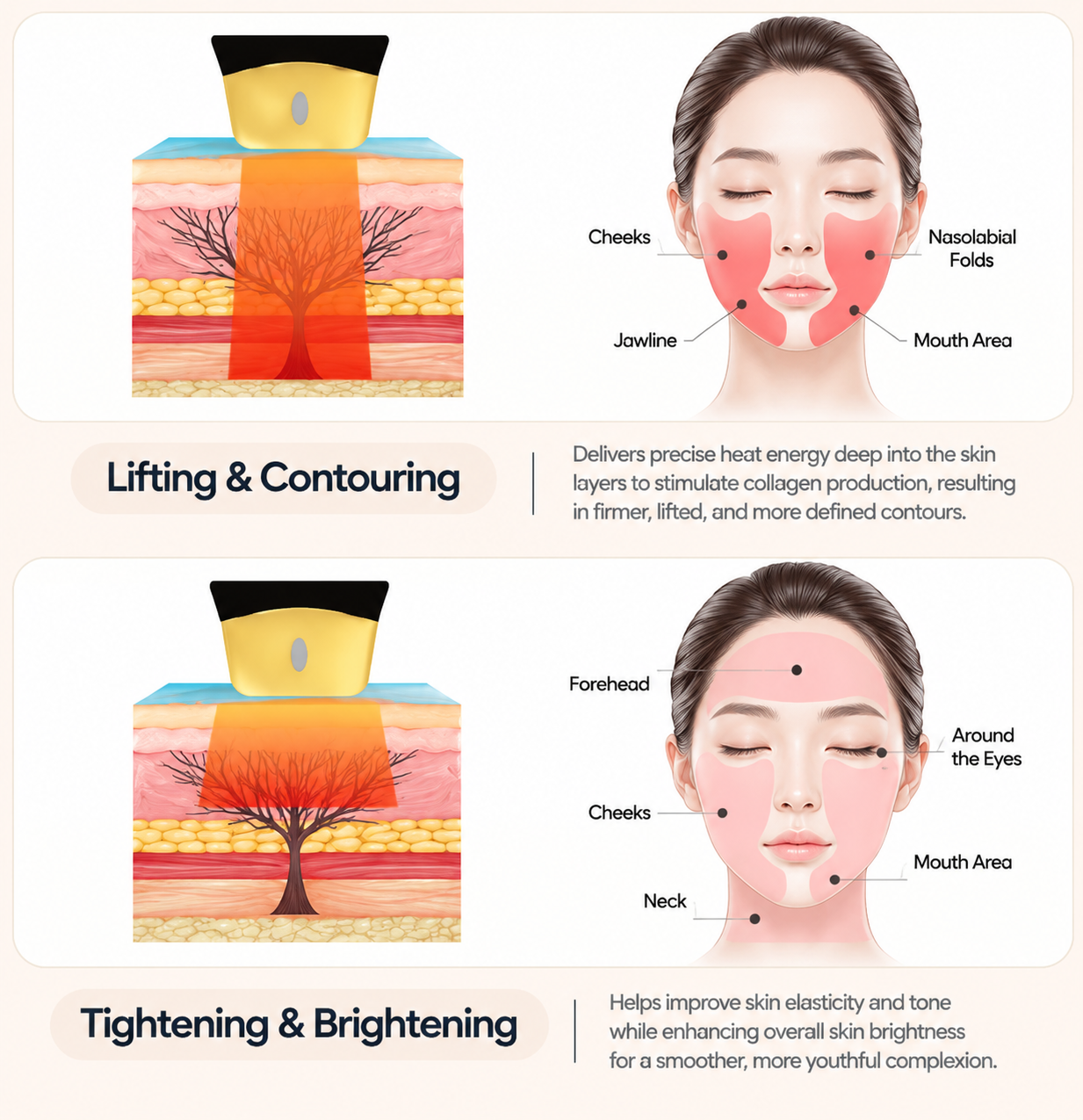
Titanium® is a laser lifting system: a single applicator delivers laser energy to selected facial areas, with the delivery pattern varying according to what the treatment is aiming at.
According to the clinic content, the system uses three wavelengths — 755 nm, 810 nm and 1064 nm.
The clinic also describes sapphire contact cooling, and lifting, contouring, tightening and skin-tone improvement modes.
Focused delivery is used where lifting and contouring are the goal; broader delivery where tightening and brightening are.
Treatment settings are adjusted to the patient's skin condition, facial anatomy, sensitivity and aesthetic goals.
Most sessions complete within approximately 30 to 60 minutes.
The three-wavelength description is the technical point that distinguishes this from the clinic's other devices, and it explains the breadth of the claimed effects. Different wavelengths are absorbed differently in skin, so a system carrying several through one applicator is aimed at more than one tissue target in a session — which is why the clinic's framing puts tone and clarity alongside firmness rather than treating them as separate appointments.
That breadth is also the honest differentiator to carry into a consultation. Ultrasound-based lifting reaches deep and targets laxity; radiofrequency heats the dermis for tightening and wrinkles. A multi-wavelength laser approach is associated with lifting, tightening and brightening together — so it suits a patient whose concern includes skin tone alongside firmness, not sagging alone.
The category context is worth keeping in view. Some lasers send heat deep into the skin without wounding the surface, and results from laser-based tightening generally appear gradually over a course of treatments rather than from one session (AAD). A surgical lift still gives the most dramatic result; every non-invasive option trades that for less downtime and lower cost.
Who Performs Titanium® at Le.J Plastic Surgery
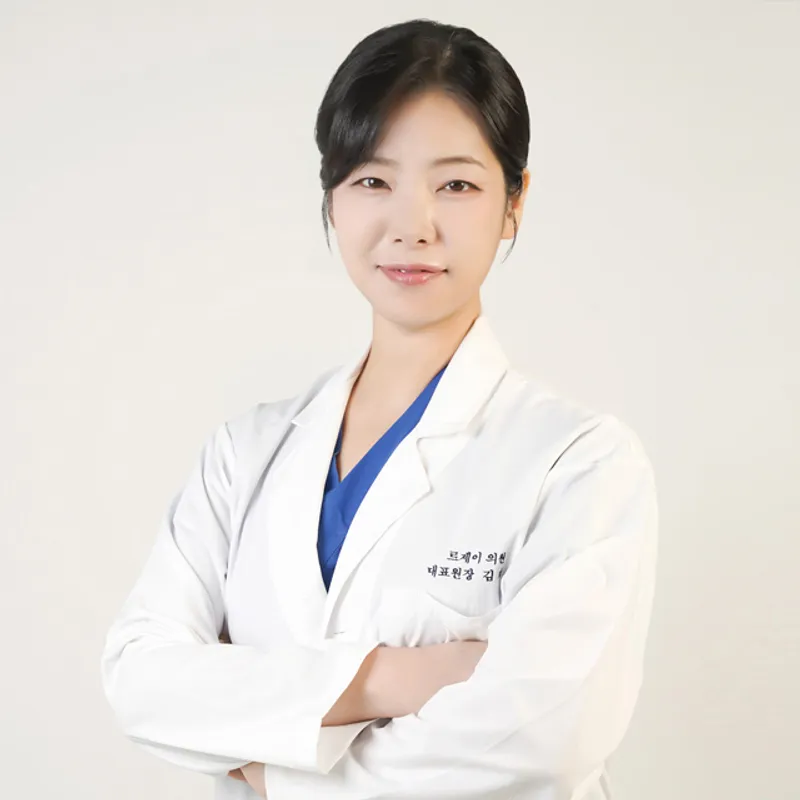
Dr. Kim Ji Sun, M.D., M.S., Ph.D.
Board-certified Otorhinolaryngologist
Titanium® is performed personally by Dr. Kim Ji Sun, the clinic's founder and Medical Director and the listed performing doctor for the parent Facial Lifting & Contouring specialty.
Dr. Kim is a board-certified otolaryngologist who earned an M.D., a Master's degree and a Ph.D. from Dankook University College of Medicine, completed internship and residency at Dankook University Hospital, trained as a Clinical Fellow in the Department of Otorhinolaryngology at Asan Medical Center, and has served as a Guest Professor at Stanford University School of Medicine in the United States. Dr. Kim's most recent relevant academic activity is a 2026 lecture on non-surgical facial rejuvenation and closed rhinoplasty at the 12th meeting of the Korean Academy of Facial Plastic and Reconstructive Surgery, where Dr. Kim is a regular member and serves on the academic, public-relations and international committees.
Le.J Plastic Surgery is a single-doctor clinic, so the surgeon who assesses you is the surgeon who treats you. For a device offering several delivery modes, the decision that matters is which mode goes where — and, before that, whether laser treatment suits your skin tone at all. The clinic's stated process is that the clinician reviews medical history, medications, allergies, previous cosmetic procedures and skin condition, including skin tone and sensitivity, to decide whether the treatment is suitable and to set appropriate parameters.
Who Is a Good Candidate for Titanium®?
Suitable candidates:
Patients with mild to moderate skin laxity or reduced skin elasticity.
Patients with blurred facial contours or a less defined jawline.
Patients seeking both lifting and tightening with a brightening effect.
Patients who want facial refinement with minimal downtime.
Who should be assessed carefully or postpone:
People with conditions that make laser-based aesthetic treatment unsuitable.
Anyone with an active skin infection, an open wound or significant inflammation in the area.
Patients who are pregnant, or where a medical condition could affect safety.
Suitability otherwise follows from skin condition, facial anatomy, sensitivity and goals. Accurate skin-tone assessment is therefore part of the consultation rather than a formality. Results also tend to be better in patients at a stable healthy weight who do not smoke and who protect their skin from the sun (AAD).
What to Expect: Procedure, Recovery, and Results Timeline
The consultation discusses your concerns and goals, reviews medical history and medications, assesses skin condition and the degree of laxity, and determines whether this treatment or another is appropriate. Expected outcomes, limitations, risks and aftercare are explained before consent is taken.
Planning begins with assessment of skin condition, facial anatomy, sensitivity and goals, so that the treatment area and technique can be customised. During treatment a laser applicator delivers energy to the selected facial areas, using focused delivery where lifting and contouring are the goal and broader delivery where tightening and brightening are. The sapphire cooling feature is intended to help reduce discomfort while that happens.
Stage | What the clinic states |
|---|---|
Session length | Most sessions complete within approximately 30–60 minutes |
Course | Typically three treatments at intervals of about 3–4 weeks |
Anaesthesia | Non-sedated and sedated options |
Recovery | Minimal — most patients return to daily activities straight away |
Stay in Korea | Typically about three to four weeks, for the treatment interval |
Flying home | Generally after 3–4 weeks, if well and without concerning symptoms |
First visible results | Approximately 5–6 days |
Maintenance | Effects intended to be noticeable immediately and maintained afterwards |
Two numbers in that table need reading together, because they are easy to misplan around. The treatment is typically a course of three sessions spaced three to four weeks apart, and the clinic's stay guidance of about three to four weeks follows from that interval rather than from any recovery requirement — recovery itself is minimal, and most patients return to daily activities straight away. If your trip is shorter than the course, the sensible conversation at consultation is how the remaining sessions would be scheduled, not whether they can be compressed.
Sensation during treatment is generally comfortable: the sapphire cooling system reduces discomfort and most patients report only mild warmth or tingling. Anaesthesia may be non-sedation or sedation, by preference and plan. Afterwards, potential side effects of energy-based skin treatments include temporary redness, warmth, swelling, tenderness or discomfort; depending on the device and the settings, less common complications may include burns, blistering or changes in skin pigmentation.
Preparation is mostly disclosure, and one item is specific to this treatment. Patients should disclose medications, allergies, previous cosmetic procedures, relevant medical conditions and recent skin treatments, and any restrictions on sun exposure, skincare products or medications must be confirmed by the treating clinician. Before the appointment, avoid arriving with sunburn, active irritation or an untreated skin infection in the planned treatment area, and ask whether you need to pause specific skincare products or avoid tanning beforehand. Do not stop prescribed medication without medical advice.
Results are described by the clinic as appearing at approximately five to six days, with the treatment positioned as providing effects immediately after the procedure and through the maintenance period. Actual results may vary according to the technology used, baseline skin condition and individual response. If something feels wrong after returning home, patients can reach the clinic's English-speaking counselling manager by phone or email.
Combining Titanium® with Other Treatments
Titanium® may be considered alongside other aesthetic treatments, depending on your skin condition and treatment goals. The doctor assesses which treatments, if any, are suitable to combine, and recommends an appropriate plan.
Within the clinic's own range, the contrast is in what each technology is aimed at rather than in which is better. Ultherapy PRIME® uses microfocused ultrasound to reach deeper layers and target laxity. Thermage FLX® uses monopolar radiofrequency to heat the deeper skin and support collagen remodeling. Endoscopic forehead lifting is surgery and repositions tissue rather than firming skin, and fat grafting addresses volume. The clinic's own statement about this group is the one to hold onto: these treatments use different technologies and may vary in comfort, cost, suitability and expected results, and the doctor recommends the most appropriate option based on your skin condition, treatment goals and preferences.
Safety, Precision, and Clinic Standards
Le.J Plastic Surgery is a Registered Medical Institution for Attracting Foreign Patients, certified by the Ministry of Health and Welfare in compliance with the Medical Overseas Expansion and Foreign Patients Attraction Act. This is a registration for treating international patients; it is not an accreditation of any treatment in this category.
The risk statement for this treatment is unusually direct, and it is better quoted than softened. Laser energy delivered into the skin carries inherent risks, particularly when excessive energy or heat is applied to unintended areas. Potential complications include pigmentary changes and burns, which is what makes accurate skin-tone assessment and appropriate parameter selection the central safety question rather than a preliminary one.
What the clinic documents against that is a process. Before treatment, the clinician reviews medical history, medications, allergies, previous cosmetic procedures and skin condition — including skin tone and sensitivity — to decide whether the treatment is suitable and to set the parameters. Treatment is postponed where there is an active skin infection, an open wound, significant inflammation, or pregnancy. During treatment, the sapphire contact cooling is part of how the skin surface is managed while energy is delivered beneath it.
Two limits, stated rather than glossed. Le.J Plastic Surgery publishes neither case volumes nor complication rates for this procedure, and this page claims neither. It has also not published an aftercare protocol specific to this treatment, so ask for your aftercare instructions in writing at the appointment. Both are fair questions at consultation, alongside the one worth asking about any laser: what settings are being used on your skin tone, and why those.
The Bottom Line
Titanium® is a non-surgical laser lifting treatment; the clinic content describes three wavelengths — 755 nm, 810 nm and 1064 nm — through one applicator.
The clinic positions it around lifting, contouring, tightening and skin-tone improvement, with sapphire contact cooling for comfort.
Sessions run approximately 30 to 60 minutes, typically three treatments about three to four weeks apart.
Recovery is minimal and most patients return to daily activities straight away; results are described at around five to six days.
Skin tone matters here more than in the clinic's other lifting options, because pigmentary change and burns are the risks that parameter selection exists to manage.
The clinic has not published an aftercare protocol for this treatment, so get your instructions in writing.
Frequently Asked Questions
What makes this different from the clinic's other lifting treatments? It is laser-based rather than ultrasound or radiofrequency, and the clinic content describes three wavelengths delivered through one applicator, with modes for lifting, contouring, tightening and skin tone. That breadth is the point: it suits a concern that includes tone and clarity alongside firmness.
How long does a session take, and how many will I need? Most sessions complete within approximately 30 to 60 minutes, and the clinic describes a typical course of three treatments at intervals of about three to four weeks.
Is it painful, and what anaesthesia is used? It is generally considered comfortable — the sapphire cooling system reduces discomfort and most patients report only mild warmth or tingling. Anaesthesia may be non-sedation or sedation, by preference and plan.
When will I see results? The clinic states results at approximately five to six days, and positions the treatment as providing effects immediately after the procedure and through the maintenance period. Actual results may vary according to the technology used, baseline skin condition and individual response.
How long should I stay in Korea, and when can I fly home? The clinic's guidance is about three to four weeks, which follows from the interval between sessions rather than from recovery. Patients can generally fly home after three to four weeks if they feel well and have no concerning symptoms. If your trip is shorter than the course, ask at consultation how the remaining sessions would be handled.
Who should avoid or postpone this treatment? Anyone with a condition making laser-based aesthetic treatment unsuitable. Postpone where there is an active skin infection, an open wound or significant inflammation in the area, during pregnancy, or where a medical condition could affect safety.
What risks should I know about? Laser energy delivered into the skin carries inherent risks, particularly when excessive energy or heat reaches unintended areas; potential complications include pigmentary changes and burns. Temporary redness, warmth, swelling, tenderness or discomfort are the more common effects.
What should I do before my appointment? Avoid arriving with sunburn, active irritation or an untreated skin infection in the planned treatment area. Tell the clinician about medications, allergies, recent cosmetic procedures and any history of unusual skin reactions, and ask whether to pause specific skincare products or avoid tanning. Do not stop prescribed medication without medical advice.
Book a Consultation at Le.J Plastic Surgery
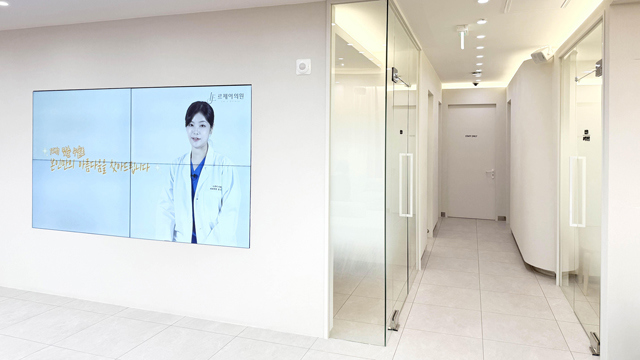
Titanium® is offered at Le.J Plastic Surgery in Gangnam-gu, Seoul, within a lifting programme that includes surgical and other device-based options. Because skin tone and sensitivity shape both suitability and settings for a laser treatment, the assessment is the step that decides whether this is the right choice. Consultations run Monday to Friday, 10:00–19:00 KST, and Saturday from 10:00 KST. International enquiries are handled by the clinic's counseling manager, Park Somi, and English-language support is available. If you are travelling from abroad, plan around the three-to-four-week treatment interval rather than a single appointment. You can use the clinic's contact page, by phone on +82-2-516-7153, or by email at info@lejplasticsurgery.com.
Disclaimer
This page is for general information only and is not medical advice. Individual results vary and cannot be guaranteed. Suitability for any procedure can only be determined through an in-person medical consultation with a qualified doctor.
Sources & Further Reading
Ready for a Personalized 1:1 Consultation?
Dr. Kim Ji Sun personally conducts every consultation, surgical plan, and follow-up at Le.J Plastic Surgery in Gangnam, Seoul.