Personalized Rhinoplasty & Facial Aesthetics in Gangnam, Seoul · Tel: +82-2-6954-1988
en-US

CLINICAL PROCEDURE GUIDE
Fat Grafting
Discover fat grafting at Le.J Plastic Surgery in Seoul, a procedure that uses your own fat to restore facial volume and enhance natural-looking contours.

Facial Fat Grafting in Seoul at Le.J Plastic Surgery

Medically reviewed by Dr. Kim Ji Sun, M.D., M.S., Ph.D., Board-Certified Otolaryngologist · Le.J Plastic Surgery, Gangnam-gu, Seoul
Fat grafting restores facial volume using fat taken from the patient's own body, filling hollow areas and softening angular contours. Within the clinic's Facial Lifting & Contouring range it is the procedure that adds volume rather than tightening what is already there, which makes it the answer to a different complaint than the lifting devices alongside it. It is performed personally by Dr. Kim Ji Sun, the clinic's founder and Medical Director and the listed performing doctor for the parent Facial Lifting & Contouring specialty.
What Is Fat Grafting?\n
Fat grafting is a surgical transfer of the patient's own fat from a donor area to selected facial areas, to restore volume and improve contour.
The material is autologous — your own fat, not a synthetic filler introduced from outside.
Fat is harvested from a suitable donor area by liposuction, processed for transfer, and injected in small amounts into the selected facial areas.
The stated targets are hollow areas and angular contours: hollow temples, a flat forehead, general facial volume loss.
Sedation anaesthesia is used.
The clinic states a surgical duration of approximately one hour, with one preoperative consultation, one surgery visit and postoperative follow-up visits.
One characteristic separates fat grafting from every other volume treatment, and it should be understood before anything else: transferred fat is living tissue that has to re-establish a blood supply where it lands, and not all of it does. The clinic states plainly that some fat is reabsorbed and that repeat treatment may be needed to achieve or maintain the desired volume. The American Society of Plastic Surgeons describes the same behaviour for the category — about half of injected fat survives, the surviving fat is durable, and in the face the results are a little less predictable, so multiple procedures are typically needed to reach the intended result. This is not a drawback hidden in the small print; it is how the technique works, and planning around it is part of the procedure.
Who Performs Fat Grafting at Le.J Plastic Surgery
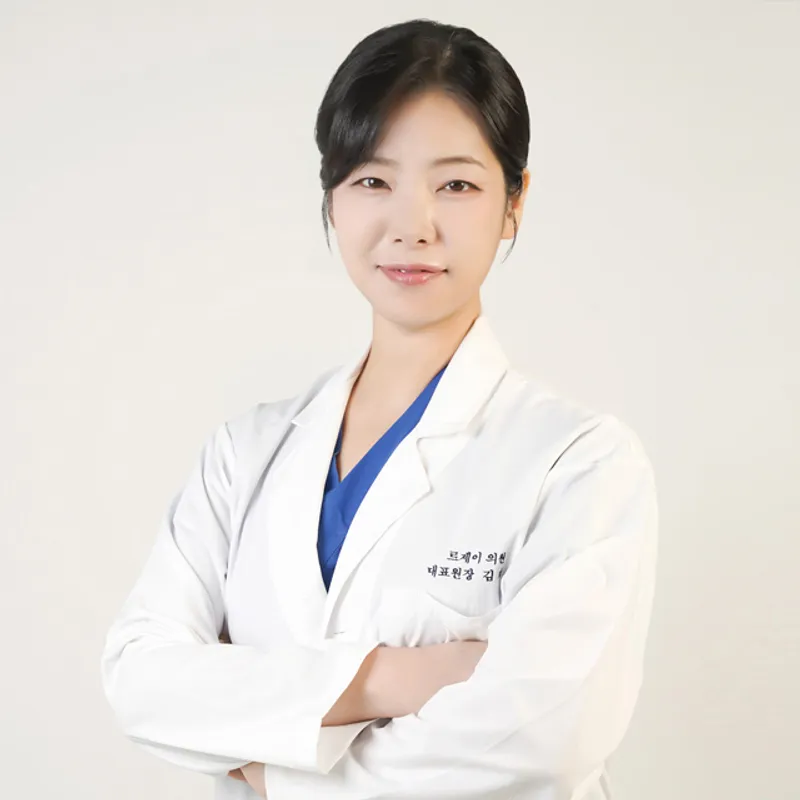
Dr. Kim Ji Sun, M.D., M.S., Ph.D.
Board-certified Otorhinolaryngologist
Fat grafting is performed personally by Dr. Kim Ji Sun, the clinic's founder and Medical Director and the listed performing doctor for the parent Facial Lifting & Contouring specialty.
Dr. Kim is a board-certified otolaryngologist who earned an M.D., a Master's degree and a Ph.D. from Dankook University College of Medicine, completed internship and residency at Dankook University Hospital, trained as a Clinical Fellow in the Department of Otorhinolaryngology at Asan Medical Center, and has served as a Guest Professor at Stanford University School of Medicine in the United States.
Fat grafting, listed by the clinic as lipofilling, is one of Dr. Kim's stated core specializations alongside nasal surgery, forehead lift surgery and regenerative treatment. Dr. Kim's most recent relevant academic activity is a 2026 lecture on non-surgical facial rejuvenation and closed rhinoplasty at the 12th meeting of the Korean Academy of Facial Plastic and Reconstructive Surgery, where Dr. Kim is a regular member and serves on the academic, public-relations and international committees.
Le.J Plastic Surgery is a single-doctor clinic, so the surgeon who assesses you is the surgeon who treats you. Fat grafting rewards that arrangement more than most procedures, because the decisions that determine the result — how much volume each area needs, where the fat comes from, how much to place in a single session knowing some will not survive — are judgement calls made during surgery by whoever planned it.
Who Is a Good Candidate for Fat Grafting?
Suitable candidates:
Patients with localised facial volume loss or contour irregularities who want those areas filled rather than tightened.
Patients with sufficient donor fat available, suitable general health, and realistic expectations about volume retention and the possibility of a second session.
Who should be assessed carefully or postpone:
Patients with medical conditions that make elective surgery unsafe, or with an active infection.
Patients with inadequate donor fat for the planned correction — the material has to come from somewhere, and if there is not enough, the plan changes.
Patients whose smoking, blood-clotting risk, medication or anaesthesia history requires review first.
Patients expecting guaranteed, perfectly symmetrical results, or unable to follow postoperative instructions.
The donor-fat question is the one that most often changes the plan, and it cuts both ways. A patient with very little body fat may not have enough to harvest for the correction they want; a patient with plenty may still have little in a site suitable for this purpose. Either way the assessment covers facial anatomy, the areas of volume loss, skin and soft-tissue characteristics and donor-fat availability together, and the discussion that follows should cover expected volume retention, possible asymmetry, and whether additional grafting may be needed. Treating that last point as a possibility from the outset is more honest than treating it as a disappointment later.
What to Expect: Procedure, Recovery, and Results Timeline
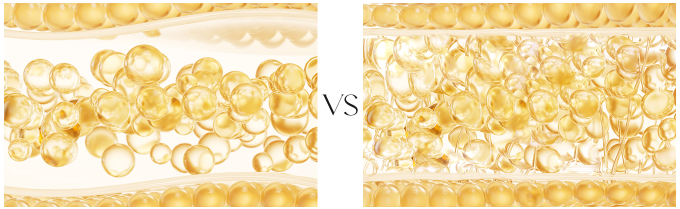
At consultation the clinician assesses facial anatomy, the areas of volume loss, skin and soft-tissue characteristics, donor-fat availability, medical history, medications, allergies and surgical goals, then discusses expected volume retention, possible asymmetry, the risks, and whether additional grafting may be needed. That discussion is the one worth arriving prepared for, because it is where the number of sessions is settled rather than assumed.
On the day, the surgeon marks the donor and treatment areas, administers the planned anaesthesia, harvests fat from a suitable donor area using liposuction, processes the harvested fat for transfer, injects small amounts into the selected facial areas using appropriate instruments, and then provides postoperative instructions and arranges follow-up.
Stage | What the clinic states |
|---|---|
Surgical duration | Approximately 1 hour |
Anaesthesia | Sedation anaesthesia |
Visits | 1 preoperative consultation, 1 surgery visit, postoperative follow-up |
Recovery | Commonly around 7–14 days |
Recommended stay in Korea | Approximately 7–14 days |
Flying home | Around 7–14 days |
Initial results | Noticeable within 7–14 days |
Stable result | Generally more stable over 3–6 months |
Two sites recover rather than one, and the one people forget is the donor site. Common temporary effects include swelling, bruising, tenderness, soreness and temporary numbness at either the donor or the treated area, along with firmness or temporary asymmetry while healing. The ASPS notes that using fat involves additional discomfort in the donor area, which is the trade for avoiding a manufactured product. Symptoms should gradually improve; worsening pain, redness or swelling should be assessed by a medical professional.
Potential complications include infection, bleeding, fluid collection, fat necrosis, oil cysts, contour irregularities, asymmetry, under-correction, scarring, anaesthesia-related complications and the need for revision, and risks vary by treatment area and technique. Under-correction sits on that list for the reason described above, and it is better read as an expected variable than as a complication.
Aftercare covers incision care, prescribed medication, activity and follow-up. Keep the treated areas protected, avoid unnecessary pressure on grafted areas according to the surgeon's advice, and expect gentle walking to be encouraged while strenuous exercise waits until you are cleared.
For patients returning to the United States, the practical concerns are the familiar ones — managing swelling on a long flight, protecting the treated areas in transit, and arranging follow-up across time zones. The NHS, writing about cosmetic surgery abroad, notes that air travel and major surgery both increase the risk of a blood clot and recommends no flying for 7 to 10 days after facial cosmetic procedures, which sits inside the clinic's own 7–14 day figure. If something feels wrong after returning home, patients can reach the clinic's English-speaking counselling manager by phone or email.
Combining Fat Grafting with Other Treatments
Fat grafting may be combined with selected facial procedures when clinically appropriate, depending on anatomy and the surgical plan; in general practice the combinations named are a facelift or eyelid surgery. Combined surgery changes operating time, recovery and the length of stay, so a combination is a scheduling decision as much as a surgical one.
Within the clinic's own range the distinction worth drawing is between adding volume and tightening tissue. Endoscopic forehead lifting repositions descended tissue surgically. Ultherapy PRIME®, Thermage FLX® and Titanium® are non-surgical energy-based treatments aimed at skin firmness and tightening. Fat grafting does neither: it replaces lost volume. A hollow temple will not be filled by tightening, and sagging skin will not be lifted by filling, which is why the assessment starts with which of the two complaints is actually present. Outside this clinic's range, hyaluronic-acid dermal fillers and other injectable volume treatments address selected volume deficits without a donor-site procedure, and no treatment at all remains a legitimate option. Revision and complex cases are assessed individually by Dr. Kim Ji Sun at consultation.
Safety, Precision, and Clinic Standards
Le.J Plastic Surgery is a Registered Medical Institution for Attracting Foreign Patients, certified by the Ministry of Health and Welfare in compliance with the Medical Overseas Expansion and Foreign Patients Attraction Act.
The clinic has not published technique details specific to its own protocol, and this page does not supply any in their place. What it does describe at programme level is personalised facial fat grafting focused on restoring facial volume and creating balanced contours tailored to individual anatomy, preoperative assessment of facial proportions and relevant functional concerns, and postoperative monitoring. The clinic's recovery facilities include hyperbaric oxygen equipment.
For the category as a whole, the American Society of Plastic Surgeons is a useful independent check on what to expect from transferred fat. Its dermal filler safety guidance covers the injection-related complications. Reading both before a consultation makes the conversation about volume retention a shorter one.
Le.J Plastic Surgery publishes neither case volumes nor complication rates for this procedure, and this page claims neither. Both are fair questions at consultation, as is the one worth asking any surgeon in this category: how many of these operations they have performed, how many involved complications, and what follow-up to expect if something goes wrong. For fat grafting specifically, add one more: what the clinic's own practice is when a second session turns out to be needed.
The Bottom Line
Fat grafting restores facial volume using the patient's own fat, harvested by liposuction and injected in small amounts.
Some transferred fat is reabsorbed; repeat treatment may be needed to achieve or maintain the result, and that is inherent to the technique.
The clinic states approximately one hour of surgery under sedation anaesthesia, with recovery commonly around 7–14 days.
Initial results show within 7–14 days and generally become more stable over 3–6 months.
Two sites heal, not one — the donor area has its own soreness, swelling and recovery.
Frequently Asked Questions
How much of the transferred fat actually stays? Not all of it, and the honest answer is that it varies. The clinic states that some fat is reabsorbed and that repeat treatment may be needed to achieve or maintain the desired volume. For the category, ASPS puts survival at around half of what is injected, with the surviving fat durable thereafter, and notes that results in the face are a little less predictable than elsewhere. Plan for the possibility of a second session rather than treating it as a failure of the first.
Where does the fat come from? A donor area chosen at assessment and harvested by liposuction — commonly the abdomen or a similar site. Availability of suitable donor fat is part of the candidacy decision, and it is assessed alongside your facial anatomy rather than afterwards.
Is this the same as a filler? No. A hyaluronic-acid filler is a manufactured product injected without surgery; fat grafting is a surgical procedure with a donor site, anaesthesia and a recovery period at both ends. Fat is your own tissue and the surviving portion is long-lasting, but it requires harvesting and the volume that takes is less exactly predictable. The two are alternatives for some volume deficits, not versions of the same thing.
How long does the surgery take, and how long should I stay? The clinic states approximately one hour of surgery under sedation anaesthesia. For the trip, plan roughly 7–14 days in Korea, with flying home around the same point — and note that the NHS advises no flying for 7 to 10 days after facial cosmetic procedures, so the earlier end of that range is a floor rather than a target.
When will I see the result, and when is it final? Initial results become noticeable within about 7–14 days, once the first swelling settles. The result generally becomes more stable over three to six months, as the surviving fat establishes itself and any firmness or temporary asymmetry resolves. Judging volume in the first fortnight means judging swelling.
Does the donor site hurt? It is sore, and that soreness is the trade for using your own tissue. Expect swelling, bruising, tenderness and temporary numbness at the harvest site as well as at the face, and follow the incision-care instructions for both. ASPS describes this additional donor-area discomfort as a known part of using fat rather than an off-the-shelf filler.
What are the complications I should know about? Beyond the temporary effects, the stated possibilities are infection, bleeding, fluid collection, fat necrosis, oil cysts, contour irregularities, asymmetry, under-correction, scarring, anaesthesia-related complications and the need for revision. Risks vary by treatment area and technique, which is one more reason the treatment-area plan is settled at examination.
How should I prepare? Complete the medical assessment and disclose medications, supplements, allergies, smoking, previous surgery and anaesthesia history. Follow the surgeon's instructions on fasting, medication adjustments and smoking cessation, and do not stop prescribed medication without medical advice. Arrange transport after surgery and assistance during the initial recovery, and tell the clinical team if your health changes before the procedure.
Book a Consultation at Le.J Plastic Surgery
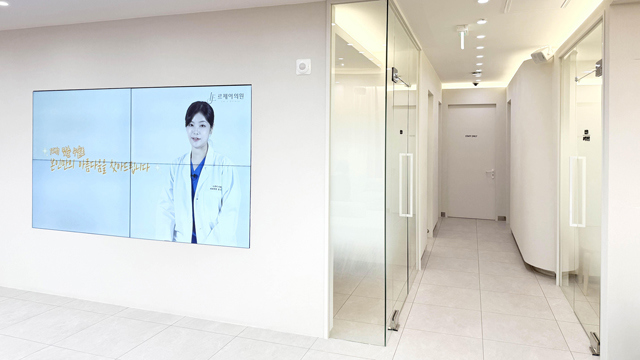
Fat grafting at Le.J Plastic Surgery in Gangnam-gu, Seoul begins with an assessment of where volume has been lost, what the contours need, and whether suitable donor fat is available for the correction you want. Consultations run Monday to Friday, 10:00–19:00 KST, and Saturday from 10:00 KST. International enquiries are handled by the clinic's counseling manager, Park Somi, and English-language support is available. If you are travelling from abroad, plan around a stay of roughly 7–14 days, and ask at consultation how the clinic handles a second session if volume retention falls short. You can use the clinic's contact page, by phone on +82-2-516-7153, or by email at info@lejplasticsurgery.com.
Disclaimer
This page is for general information only and is not medical advice. Individual results vary and cannot be guaranteed. Suitability for any procedure can only be determined through an in-person medical consultation with a qualified doctor.
Sources & Further Reading
Ready for a Personalized 1:1 Consultation?
Dr. Kim Ji Sun personally conducts every consultation, surgical plan, and follow-up at Le.J Plastic Surgery in Gangnam, Seoul.