Personalized Rhinoplasty & Facial Aesthetics in Gangnam, Seoul · Tel: +82-2-6954-1988
en-US

MEDICAL ARTICLE & INSIGHTS
What a Korea Rhinoplasty Package Actually Includes
Consultation, surgery, dressing and suture visits, monitoring and travel clearance — the stages of care around a Seoul rhinoplasty, and what to confirm.

What a Korea Rhinoplasty Package Actually Includes
Medically reviewed by Dr. Kim Ji Sun, M.D., Ph.D., Board-Certified Otolaryngologist
"Package" is a word patients use and clinics mostly do not. What actually exists is a sequence of clinical stages, each with its own appointment, and the useful thing is to be able to name them — because a comparison between two clinics is really a comparison between two sequences, and the figure attached to either is meaningless without it.
Le.J Plastic Surgery describes a customized care system covering the patient journey from consultation through surgery and recovery, with careful monitoring throughout. This page unpacks that sentence into the stages it contains, and ends with the stage you are responsible for yourself.
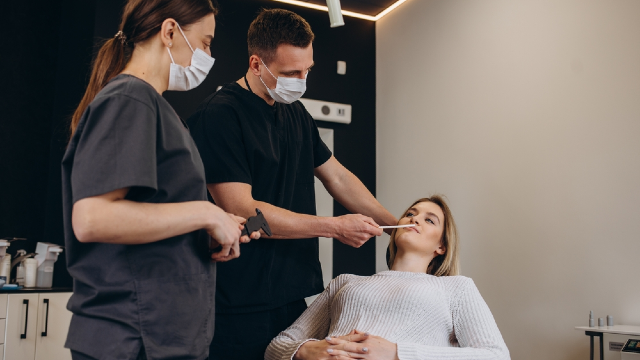
Stage one: the assessment
The consultation is not an intake formality. It is where the plan is produced, and everything downstream is determined by it.
The clinic's stated process evaluates your natural anatomical structure, your current medical condition, functional factors and your individual circumstances, after which a detailed surgical plan is developed. Preparation for rhinoplasty specifically includes a review of medical history, medications and supplements, previous nasal surgery or treatment, breathing concerns and your aesthetic goals, together with an examination of the nose and facial structure.
For an international patient there are usually two parts to this. An online conversation happens before travel — the clinic offers consultation requests, telephone consultation and non-face-to-face consultation options — and the examination happens once you arrive. Both belong to stage one. Only the second produces the plan.
Worth confirming when you book: whether the examination and the operation fall on the same day or different days, since that changes your itinerary and occasionally your flights.
Stage two: the operation
The surgery itself is the part patients think about most and the part that varies least in structure.
What belongs to this stage is the procedure, the anesthesia, the facility and the operating team. Le.J Plastic Surgery specifies sedation anesthesia for its CellFix nasal-tip technique and names sleep anesthesia for its closed and non-implant procedures, while noting that the approach depends on the technique, the extent of surgery and the patient's condition. The clinic is a single-doctor practice, so the surgeon is not a variable within it.
Where the technique involves harvesting your own cartilage, this stage includes a second surgical site. That is not an extra service; it is part of the operation, and it is the reason a later appointment exists.
Stage three: the days immediately after
This is the stage most often left out of people's mental model, and it is the one that makes a trip feel managed rather than improvised.
Le.J Plastic Surgery describes postoperative care for its CellFix nasal-tip patients that includes disinfection, injection treatment and swelling care. Those are clinical activities with appointments attached, not advice sheets. The clinic also describes ongoing observation throughout recovery as part of its care system.
What that means for your calendar is that the days after the operation are not free days. You should expect to be back in the building, more than once, and you should plan accommodation and travel inside the city around that rather than around sightseeing.
Stage four: the scheduled appointments
Two milestones are published, and they are the fixed points your stay is built around.
Taping is removed at approximately three days. Where cartilage has been harvested, sutures at that site come out roughly a week after the operation. Everyday recovery for the clinic's closed approach is described as beginning once the taping comes off, and the clinic reports about three days to daily life for its nasal-tip technique.
Read "daily life" carefully. It is a return-to-routine milestone, not the end of healing. Swelling continues to resolve for a long time afterward and the tip is the slowest region to settle, so the nose you see at the suture appointment is not the nose you are going to have.
What "monitoring" actually means
The word appears in every description of care of this kind and it is worth translating, because it sounds like watchfulness and is actually a sequence of specific checks.
At each visit somebody is looking at the surgical site and forming a view about whether it is behaving normally: how the taping or dressing has held, whether swelling is following the expected curve, whether the harvest site is closing cleanly, whether there are signs of infection. Le.J Plastic Surgery describes ongoing observation throughout recovery as part of its care system, and those visits are where the observation happens.
That matters for a reason that is easy to miss when you are choosing between clinics. Monitoring is not only a service delivered to you; it is how problems get found early, while you are still in the same city as the people who would deal with them. A visit you skip to catch a flight is not a small saving. It is the removal of one of the checkpoints the whole schedule was built around, and it is removed at exactly the point in healing when the checkpoints are closest together.
Stage five: being cleared to travel
This stage has no fixed date, which is exactly why it deserves naming.
Flying is a clinical decision rather than a calendar one, and the safest arrangement for an international patient is to book the return flight so that it falls after the postoperative check rather than choosing the earliest possible departure. The clinic's own material is consistent that international patients should confirm their individual follow-up and travel schedule directly rather than assume a standard duration.
Build slack into the booking. A flexible return ticket costs something; a rebooked one costs more, and a flight taken before someone was ready to clear it costs more than either.
Stage six: after you land at home
Here the sequence changes character, because the clinic is no longer in the room.
What you want out of this stage is documentation and a contact route. Ask for records of what was performed, the appointment dates you attended, any medication with dosing, restrictions with their end dates, the findings that are expected during normal healing, the findings that warrant getting in touch, and how to make contact with an expected response time.
Then give a copy to your own physician when you get home. The US Centers for Disease Control and Prevention recommends exactly this for patients who have had procedures in other countries — carry the documentation and share it with a clinician where you live — because continuity of care runs on records rather than on recollection.
What to confirm rather than assume

Several things that patients imagine are bundled are worth asking about explicitly, in writing, before you commit. Do not infer the answer from silence in either direction.
Which non-clinical arrangements the clinic handles. Airport arrival, accommodation, transport within the city, and any interpreting arrangement are separate questions from the clinical sequence. Ask what the clinic's arrangement is for your dates, rather than assuming either that everything is organized or that nothing is.
How many postoperative visits your specific plan includes. The published milestones are the common ones; your plan may have more.
What happens if you need to stay longer. Recovery occasionally runs behind schedule. Knowing in advance how that is handled is worth more than hoping it will not happen.
What the arrangement is if a further procedure is later needed. Every rhinoplasty carries the possibility of revision, and the clinic lists it among the potential outcomes of its nasal procedures. Ask how that conversation would work from six thousand miles away, before you need to have it.
How to reach the clinic once you are home, and how quickly. The route and the expected timing, not a reassurance.
The part of the package you supply yourself
Everything above is what the clinic brings. The sequence has a second half that nobody can provide for you, and it is the half that most often decides how the trip turns out.
You supply the accuracy of the history. The assessment can only work with what it is told, and an omitted previous procedure or an unmentioned medication silently changes the quality of the plan without anybody noticing until later.
You supply the stay. A schedule with a dressing change, a suture appointment and a review in it needs enough days around it to happen unhurriedly, and a trip compressed to fit cheaper flights is a trip that will skip one of them.
You supply the compliance in the weeks afterward, when the clinic is no longer in the room and the restrictions have started to feel arbitrary. That is the stretch where results are quietly won or lost, and it is entirely unsupervised.
And you supply the reporting. If something looks wrong, the clinic learns about it when you say so — not before. The documentation and the contact route from stage six exist for exactly that, and they only work if you use them early rather than waiting to see.
Put differently: the clinic's half of the sequence is bounded by the trip, and yours is not. That asymmetry is worth planning around, and it is the most useful thing to take away from any conversation about what is or is not included.
Start the arrangements on the contact page with your dates and your history. The about page sets out the practice behind the care system described here, and it is a reasonable place to begin if you are still deciding whether to open the conversation at all.
The Bottom Line
- The care sequence has six stages: assessment, operation, immediate postoperative care, scheduled appointments, travel clearance, and what happens after you land at home.
- Postoperative care for the clinic's nasal-tip patients includes disinfection, injection treatment and swelling care — appointments, not advice sheets.
- Plan the stay around the published milestones: taping removal at about three days and harvest-site sutures roughly a week after the operation.
- Book the return flight to fall after the postoperative check rather than at the earliest possible date, and confirm your own schedule with the clinic.
- Confirm non-clinical arrangements explicitly rather than inferring them, and ask in advance how a later revision conversation would work from abroad.
Frequently Asked Questions
What does the clinic's care system cover?
The clinic describes it as spanning the patient journey from consultation through surgery and recovery, with careful monitoring throughout, and names postoperative care including disinfection, injection treatment and swelling care for its nasal-tip patients.
How many appointments should I expect after the operation?
At least a dressing appointment and, where cartilage was harvested, a suture-removal appointment, plus a review before you travel. Ask how many your specific plan includes.
When is the taping removed?
At approximately three days, with everyday recovery for the clinic's closed approach described as beginning once it comes off.
When can I fly home?
That is a clinical decision rather than a fixed date. Arrange the return flight to fall after the postoperative check, and confirm your individual schedule with the clinic.
Does the clinic arrange accommodation or transport?
Ask directly for your dates rather than assuming either way — non-clinical arrangements are a separate question from the clinical sequence, and the answer belongs in writing.
What should I take home with me?
Records of the procedure, appointment dates, medication with dosing, restrictions with end dates, expected findings, warning findings, and a contact route with an expected response time.
Is a revision covered if I need one later?
Ask before you travel. Revision is listed among the potential outcomes of nasal surgery generally, and how that conversation works from abroad is worth establishing in advance.
What is the most common planning mistake?
Compressing the trip to fit cheaper flights. A schedule containing a dressing change, a suture appointment and a review needs enough days around it, and a compressed trip skips one of them.
This article is for general informational purposes and does not constitute individualized medical advice, and it contains no pricing. It is not a self-diagnosis tool. The care applicable to your case can only be determined through a consultation with a qualified surgeon who has examined you in person.
References
- MedlinePlus — After Surgery
- MedlinePlus — Surgery
- CDC Travelers' Health — Medical Tourism
- CDC Yellow Book — Medical Tourism
- MedlinePlus — Personal Health Records
- MedlinePlus — Wounds and Injuries
Ready for a Personalized 1:1 Consultation?
Dr. Kim Ji Sun personally conducts every consultation, surgical plan, and follow-up at Le.J Plastic Surgery in Gangnam, Seoul.