Personalized Rhinoplasty & Facial Aesthetics in Gangnam, Seoul · Tel: +82-2-6954-1988
en-US

MEDICAL ARTICLE & INSIGHTS
Ultherapy PRIME: Microfocused Ultrasound Skin Lifting
Ultherapy PRIME at Le.J Plastic Surgery uses microfocused ultrasound with real-time imaging to stimulate collagen, in one session with no downtime afterward.

Ultherapy PRIME Explained: How Microfocused Ultrasound Lifts Skin Without Surgery
Medically reviewed by Dr. Kim Ji Sun, M.D., Ph.D., Board-Certified Otolaryngologist
Ultherapy is a non-invasive skin-lifting treatment that sends microfocused ultrasound energy into specific layers of tissue to stimulate the body's own collagen production, with real-time imaging showing the practitioner where that energy is going. Le.J Plastic Surgery offers it as Ultherapy PRIME, a single-session treatment with no downtime. What it is not is a substitute for surgery, and understanding that boundary is the difference between being pleased with the result and being disappointed by it.
What microfocused ultrasound actually does
The treatment works on a simple premise: skin that has lost firmness has lost collagen, so the useful intervention is one that prompts the skin to make more.
Ultherapy delivers ultrasound energy focused at depth rather than spread across the surface. The energy is absorbed in targeted tissue layers, and the body responds by producing new collagen over the following weeks and months. Nothing is cut, nothing is removed, and the improvement is built by your own tissue rather than placed there.
The American Society of Plastic Surgeons describes the loss of skin tone in aging as a weakening of the collagen and elastin fibers within the skin. That is the deficit these treatments are aimed at, which is why the mechanism is collagen stimulation rather than tightening in any mechanical sense.
Real-time visualization, and why it is not a marketing detail
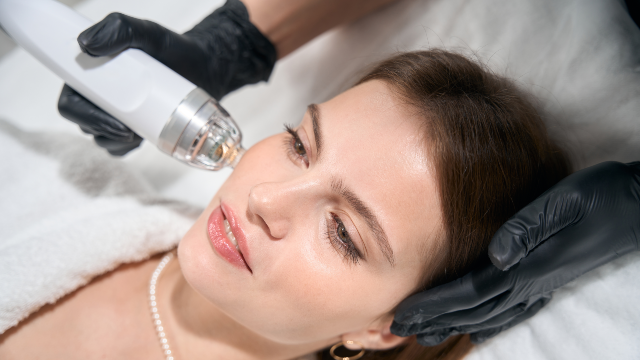
The feature that distinguishes Ultherapy from energy treatments generally is that the practitioner can see the tissue while treating it.
Le.J Plastic Surgery describes real-time visualization being used both to assess the skin and to deliver ultrasound energy precisely into the targeted collagen-rich layers. In practice, that means the depth being treated is observed rather than assumed — and depth is the whole game in a treatment whose effect depends entirely on which layer absorbs the energy.
This matters more in some faces than others. Skin thickness, fat distribution and the position of underlying structures vary considerably between individuals, and a fixed setting that suits one face will sit in the wrong plane in another.
What happens during a session
The sequence Le.J Plastic Surgery describes is short and undramatic:
- The skin is cleansed and the treatment area identified.
- Ultrasound gel is applied.
- The applicator is placed against the skin.
- Real-time imaging is used to assess the area, and energy is delivered into the targeted layers.
Ultherapy PRIME is designed as a one-session treatment. Treatment length varies with the plan and the areas being covered, so the appointment is sized to your face rather than to a standard block.
Before any of it, there is a consultation: the skin is assessed, your concerns are discussed, and a plan is built around them.
When the result appears — and when it does not
This is where expectations most often go wrong, so it is worth being precise.
Le.J Plastic Surgery describes initial lifting as sometimes visible earlier, with the main result developing over approximately two to three months as new collagen and elastin form, and lasting up to a year or more depending on the individual. The American Academy of Dermatology's account of ultrasound skin tightening is consistent with that shape: a single treatment, with the lifting effect appearing across a window of two to six months rather than immediately.
So the honest framing is that you leave the appointment having started something, not having finished it. The AAD describes non-invasive tightening treatments generally as producing gradual results — which is precisely what makes them look natural and precisely what makes them frustrating for anyone expecting a visible change the same week.
The boundary with surgery
There is a line here, and Le.J Plastic Surgery draws it rather than blurring it: Ultherapy is a non-invasive lifting option for people who are not ready for a surgical facelift. It uses ultrasound energy and imaging; a facelift uses an operation.
The American Society of Plastic Surgeons states the position directly — a facelift can only be performed surgically, while minimally invasive rejuvenation may delay the need for one and complement it. Those are two distinct roles: delay and complement. Neither is replacement.
Understanding that saves a specific disappointment. If what troubles you is loose skin that hangs, an energy treatment will not lift it to where surgery would. If what troubles you is early laxity and a face that has begun to look tired rather than fallen, this is the category of treatment that addresses it.
Who is a suitable candidate
Le.J Plastic Surgery describes suitable candidates as people with some degree of skin laxity or loss of elasticity who want a non-invasive alternative to surgical lifting. Ultherapy PRIME is also described as suitable for people with mild to moderate skin laxity of the abdomen or arms who prefer no downtime.
There are clear exclusions, and they are worth reading rather than skimming. Ultherapy should not be used on the eyes, or in any location or technique where the ultrasound energy could reach the eye. Within the indicated treatment areas, it should not be used over open wounds or lesions, over severe or cystic acne, or over implants sitting in the area being treated.
If any of those apply to you, that is a conversation to have at consultation rather than a detail to discover on the day.
Side effects and what they feel like
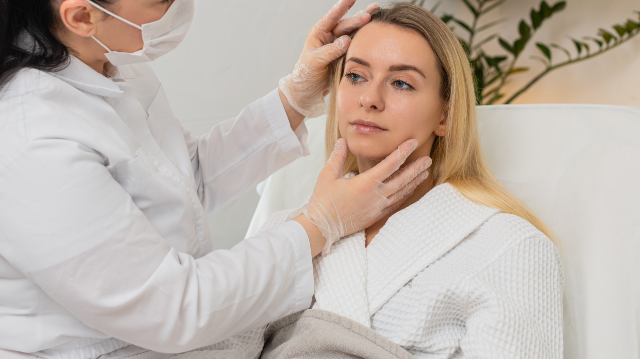
Le.J Plastic Surgery lists the common effects as redness, swelling, pain, tenderness, tingling, and temporary nerve effects, with mild bruising also possible. Most reported effects are temporary.
There is no downtime. Normal activities can be resumed immediately, following whatever instructions your practitioner gives. The treated area may look flushed initially, and that redness generally settles within a few hours.
The American Academy of Dermatology's general point about cosmetic treatments applies here as it does to surgery: these are medical procedures, they carry medical risk, and asking questions before agreeing to one is itself part of reducing that risk. A non-invasive treatment still carries risk — what differs is the profile of that risk, not its absence.
What to establish before you book
Four questions do most of the useful work at a first appointment, and none of them requires any technical knowledge to ask:
- What depth is being treated in my face, and why that depth? The answer should refer to your skin, not to a standard protocol.
- What degree of change is realistic for the laxity I actually have? Early laxity and established sagging respond differently.
- When should I judge the result? If the answer is anything other than "in a few months," the expectation being set is wrong.
- What would make me unsuitable? The exclusions above are specific, and it is better to raise them than to wait to be asked.
Le.J Plastic Surgery's consultation covers assessment of the skin, discussion of what concerns you, and a plan built from both — so these are questions the appointment is designed to answer rather than awkward ones to introduce.
How this fits Le.J Plastic Surgery's approach
Le.J Plastic Surgery's stated philosophy is fully personalized treatment built on each person's own facial anatomy rather than a standardized design applied to everyone. For an energy-based treatment, that is not an abstract commitment — it is the difference between a device used at default settings and a device aimed at the layer that actually needs treating in your face.
The clinic's planning for Ultherapy runs the same way: the skin is assessed, concerns are identified, and the treatment plan follows from both.
What you can do to protect the result
Some of what determines how long a lifting result lasts is outside the treatment room.
Sunlight is a major cause of skin aging, according to the MedlinePlus page on the subject, which is sourced to the NIH National Institute on Aging. The same page records cigarette smoking as a contributor to wrinkles, with the effect growing according to how much someone smokes and for how long. A treatment that spends two to three months building collagen is working against those two forces the entire time.
That is not a lecture; it is arithmetic. Sun protection is the cheapest part of any lifting plan.
An online consultation before travel lets your skin, your concerns and the treatment plan be discussed while you are still at home. Requests are made on the contact page. What personalized treatment means in practice here is set out on the about page.
The Bottom Line
- Ultherapy uses microfocused ultrasound with real-time visualization to stimulate the body's own collagen in targeted tissue layers.
- Le.J Plastic Surgery offers it as Ultherapy PRIME, designed as a one-session treatment with no downtime.
- Initial lifting may be visible earlier, but the main result develops over approximately two to three months as new collagen and elastin form, and can last a year or more.
- It is a non-invasive alternative for people not ready for surgery, not a replacement for it — the American Society of Plastic Surgeons notes that a facelift can only be performed surgically.
- It should not be used on the eyes, or over open wounds, lesions, severe or cystic acne, or implants in the treatment area.
Frequently Asked Questions
How soon will I see a result?
Some initial lifting may be visible earlier, but the main result develops over approximately two to three months as new collagen and elastin form. The American Academy of Dermatology similarly describes the lifting effect of ultrasound treatment appearing across a two-to-six-month window after a single session. It is a gradual treatment by design.
How many sessions will I need?
Ultherapy PRIME is designed as a one-session treatment at Le.J Plastic Surgery. The length of that session varies according to your individual treatment plan and the areas being treated.
Is there any downtime?
No. Normal activities can be resumed immediately afterward, following your practitioner's instructions. The treated area may look flushed at first, and that generally settles within a few hours. Temporary swelling, tingling or tenderness can also occur.
Will it hurt?
Discomfort during treatment is among the reported effects, alongside redness, swelling, tenderness and tingling. Most reported effects are temporary, and mild bruising is also possible. Your practitioner can discuss comfort measures as part of planning.
Can Ultherapy replace a facelift?
No, and Le.J Plastic Surgery describes it as an option for people who are not ready for surgical lifting rather than a substitute for it. The American Society of Plastic Surgeons states that a facelift can only be performed surgically, while minimally invasive rejuvenation may delay the need for one and complement it.
Are there places it cannot be used?
Yes. Ultherapy should not be used on the eyes or in any way that allows the energy to reach the eye. Within the indicated areas, it should not be used over open wounds or lesions, over severe or cystic acne, or over implants located in the treatment area.
Can it be used on areas other than the face?
Ultherapy PRIME is also described as suitable for people with mild to moderate skin laxity of the abdomen or arms who want no downtime. Which areas suit your case is decided at consultation, after your skin has been assessed.
This article is for general informational purposes and does not constitute individualized medical advice. It is not a self-diagnosis tool. Treatment candidacy, technique, and expected outcomes can only be determined through a consultation with a qualified surgeon.
References
- American Society of Plastic Surgeons: Skin Rejuvenation and Resurfacing
- American Society of Plastic Surgeons: Facelift Surgery
- American Academy of Dermatology: Firm Sagging Skin
- American Academy of Dermatology: Cosmetic Treatment Safety
- MedlinePlus: Skin Aging
Ready for a Personalized 1:1 Consultation?
Dr. Kim Ji Sun personally conducts every consultation, surgical plan, and follow-up at Le.J Plastic Surgery in Gangnam, Seoul.