Personalized Rhinoplasty & Facial Aesthetics in Gangnam, Seoul · Tel: +82-2-6954-1988
en-US

MEDICAL ARTICLE & INSIGHTS
Thermage FLX Facial Tightening: One Session, Explained
Thermage FLX at Le.J Plastic Surgery uses radiofrequency to tighten facial skin in a single 30-to-60-minute session, with improvement developing over months.

Thermage FLX for Facial Tightening: What to Expect From a Single Radiofrequency Session
Medically reviewed by Dr. Kim Ji Sun, M.D., Ph.D., Board-Certified Otolaryngologist
Thermage is a non-invasive radiofrequency treatment that delivers controlled heat energy into the skin to tighten it and soften wrinkles by prompting collagen regeneration. At Le.J Plastic Surgery, most Thermage FLX treatments take approximately 30 to 60 minutes depending on the area, and the result is designed to develop after a single treatment rather than across a course of them. That single-session design is the defining feature of the treatment, and it changes how you should plan around it.
How radiofrequency tightening works
Radiofrequency treatment heats the deeper layer of the skin — the dermis — without removing or breaking the surface.
Heating collagen in a controlled way prompts the body to remodel it and produce new collagen over the following months. Le.J Plastic Surgery describes Thermage as using precisely delivered radiofrequency thermal energy for lifting and tightening, and as stimulating collagen regeneration to improve the appearance of wrinkles.
The reason this is worth doing at all is what happens to skin over time. Skin that has lost its tone has, in the account the American Society of Plastic Surgeons gives, lost strength in its elastin and collagen fibers. Radiofrequency treatment is aimed squarely at the first half of that pair.
Changing the appearance of facial wrinkles and creases is one of the aims MedlinePlus lists among what cosmetic procedures commonly address, so the goal is unremarkable. The method is what varies.
One treatment, not a course
This is the practical point that most affects how you plan.
Le.J Plastic Surgery describes Thermage FLX results as designed to develop after a single treatment, with improvement continuing over the following two to six months as collagen remodeling occurs. Most treatments take approximately 30 to 60 minutes depending on the area being treated.
That is a different shape from treatments that build their effect over a series of appointments, and it has a specific consequence for anyone traveling: one visit is the treatment, and the months afterward are where the result actually appears. There is nothing further to come back for in order to complete it.
The American Academy of Dermatology's account of non-invasive radiofrequency skin tightening matches that arc and adds a useful detail at each end. Some tightening can be felt right away, because heating causes an immediate contraction in existing collagen. The fuller result arrives at around six months, as new collagen is laid down. And the effect can last two to three years.
Le.J Plastic Surgery's own figure for how long the result holds is one to two years, varying with skin condition and the ongoing process of aging. Both figures describe a result measured in years rather than months, and where exactly you land within that range depends on your own skin.
What the session feels like
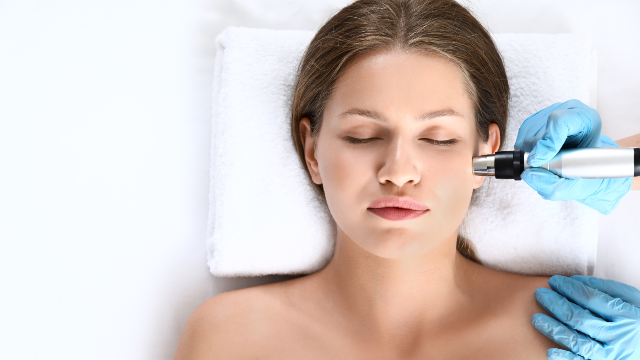
The treatment tip is placed against the skin and radiofrequency thermal energy is delivered into the dermis. Two things happen alongside that delivery: the device vibrates, and it cools the skin surface.
Neither is cosmetic. Cooling protects the outer layer of skin while the heat is being deposited below it, and the vibration improves comfort during treatment. The energy delivered is adjusted according to the area being treated, so the settings over the cheek are not the settings around the eye.
Le.J Plastic Surgery describes its Thermage treatment as providing firm lifting while reducing concern about hollowing of the cheek — a consideration that matters for anyone whose face has already lost volume, since not every tightening approach is neutral on that point.
Anesthesia arrangements at the clinic may be either non-sedation or sedation, depending on the treatment approach taken.
Recovery: there essentially isn't one
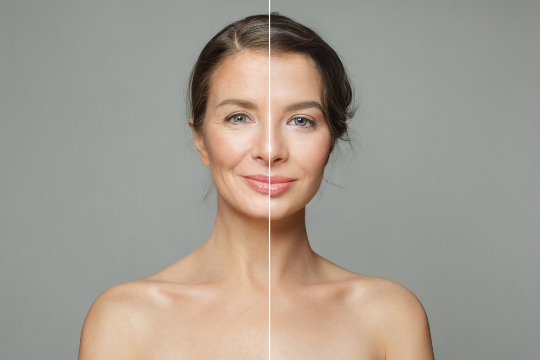
Thermage involves little to no downtime. Most people return to normal activities immediately after treatment, and mild redness generally settles within 24 hours.
No special aftercare is required. Le.J Plastic Surgery's guidance is to return to normal activities shortly afterward and continue ordinary skin maintenance, including broad-spectrum sunscreen as part of a regular routine.
That last item is not filler. MedlinePlus, drawing on material from the NIH National Institute on Aging, records that sunlight is a major cause of skin aging. A treatment spending six months building collagen is working against sun exposure the whole time, and sunscreen is the cheapest intervention available for protecting what it built.
Where Thermage sits at the clinic
Thermage is one part of Le.J Plastic Surgery's facial lifting and anti-aging menu, which also includes Ultherapy PRIME, Titanium and the Ulfacial system.
They are not interchangeable, and the clinic's position is that treatment planning follows the individual: the provider assesses the skin, discusses treatment goals, and determines whether Thermage FLX is appropriate before recommending it. The plan is customized to skin condition and to the area you want treated.
If you want a practical way to think about which treatments suit you, it is worth knowing the American Society of Plastic Surgeons' general observation that most skin treatments require a series of sessions and that addressing skin concerns often calls for more than one type of treatment. Thermage's single-session design is the exception to the first half of that, not a contradiction of the second — it can sit alongside other treatments in a plan even though it does not need repeating to work.
Why the eye area is treated separately
One of the listed treatment areas is the skin around the eyes, and it is worth understanding why that is stated as its own item rather than folded into "the face."
The skin of the periorbital region is thinner than elsewhere on the face and sits directly over structures that do not tolerate heat in the same way. Thermage FLX is described as a non-invasive device used to treat facial and periorbital wrinkles, with the energy delivered adjusted according to the region being treated. That adjustment is the whole reason the area can be included at all.
For anyone whose main complaint is fine lines around the eyes rather than laxity across the cheeks and jawline, this is worth raising explicitly at consultation, because it changes which settings and which areas the plan is built around.
Who should not have it
This is the section to read closely, because the exclusions are specific and several of them are common conditions.
Le.J Plastic Surgery notes that Thermage has not been studied in people who are pregnant or breastfeeding, in children, or in people with certain conditions including diabetes, autoimmune disease, cold sores, herpes simplex, or epilepsy. It has also not been studied over certain dermal fillers, over permanent makeup, or over tattoos.
"Not studied" is a specific statement and worth reading precisely — it describes the limits of what is known, which is exactly the sort of thing to raise at consultation so that the decision is made with it in view.
Suitable candidates, by contrast, are described as people seeking improvement in wrinkles and skin laxity without surgery. The treatment areas listed are the face and the area around the eyes.
Risks
Temporary redness and swelling are the common effects.
Beyond those, Le.J Plastic Surgery lists pain during treatment, edema, bruising, blisters, burns, scabbing, scarring, surface irregularities, altered sensation, lumps or nodules, and changes in pigment among the reported adverse effects.
Burns and pigment changes are the ones to discuss specifically, because both relate to how energy is delivered and how your particular skin responds to heat. The American Academy of Dermatology's framing of cosmetic treatment safety is the right posture here: these are medical procedures carrying medical risk, and asking questions in advance is part of lowering it.
Individual responses vary, and no particular result is promised.
Planning a visit from abroad
For an international patient, the single-session design is an advantage worth using deliberately. The treatment is completed in one appointment of roughly half an hour to an hour, and the development of the result happens after you are home.
What that means in practice is that the useful preparation happens before you travel: the skin assessment, the discussion of what you want changed, and the decision about whether this is the right treatment for your skin. All of it can happen from home, via the contact page. The about page covers how treatment plans are built around the individual.
The Bottom Line
- Thermage is a non-invasive radiofrequency treatment that heats the dermis to prompt collagen regeneration, tightening skin and softening wrinkles.
- Le.J Plastic Surgery lists most Thermage FLX treatments at approximately 30 to 60 minutes, with results designed to develop after a single treatment.
- Improvement continues over the two to six months following treatment; the clinic describes results lasting one to two years, while the American Academy of Dermatology puts radiofrequency results at two to three years.
- There is little to no downtime, and mild redness generally settles within 24 hours.
- Thermage has not been studied in several specific groups, including people who are pregnant or breastfeeding and people with diabetes, autoimmune disease or epilepsy — raise any of these at consultation.
Frequently Asked Questions
How many Thermage sessions will I need?
Le.J Plastic Surgery describes Thermage FLX results as designed to develop after a single treatment, with improvement continuing over the following two to six months. Most treatments take approximately 30 to 60 minutes depending on the area being treated.
When will I see the result?
Some tightening may be noticeable immediately, because heat causes existing collagen to contract. The fuller change develops as collagen remodels over the following two to six months. The American Academy of Dermatology similarly describes radiofrequency results reaching their best at around six months.
How long does the result last?
Le.J Plastic Surgery describes results lasting one to two years depending on skin condition and the ongoing aging process, while the American Academy of Dermatology puts the duration of non-invasive radiofrequency tightening at two to three years. Either way, it is measured in years, and the face continues to age around it.
Is there any downtime?
Little to none. Most people return to normal activities immediately, and mild redness generally resolves within 24 hours. No special aftercare is required beyond ordinary skin maintenance and broad-spectrum sunscreen.
Does it hurt?
Pain during treatment is among the reported effects. The device cools the skin surface and vibrates during energy delivery, both of which are there to improve comfort and protect the skin. Le.J Plastic Surgery offers either non-sedation or sedation arrangements depending on the treatment approach.
Which areas can be treated?
The face and the area around the eyes. Energy delivery is adjusted according to the area being treated rather than applied uniformly, which is what allows the periorbital region to be treated at all.
Who should avoid Thermage?
It has not been studied in people who are pregnant or breastfeeding, in children, or in people with conditions including diabetes, autoimmune disease, cold sores, herpes simplex or epilepsy, nor over certain dermal fillers, permanent makeup or tattoos. Any of these should be raised before treatment is planned.
This article is for general informational purposes and does not constitute individualized medical advice. It is not a self-diagnosis tool. Treatment candidacy, technique, and expected outcomes can only be determined through a consultation with a qualified surgeon.
References
- American Society of Plastic Surgeons: Skin Rejuvenation and Resurfacing
- American Academy of Dermatology: Firm Sagging Skin
- American Academy of Dermatology: Cosmetic Treatment Safety
- MedlinePlus: Skin Aging
- MedlinePlus: Plastic and Cosmetic Surgery
Ready for a Personalized 1:1 Consultation?
Dr. Kim Ji Sun personally conducts every consultation, surgical plan, and follow-up at Le.J Plastic Surgery in Gangnam, Seoul.