Personalized Rhinoplasty & Facial Aesthetics in Gangnam, Seoul · Tel: +82-2-6954-1988
en-US

MEDICAL ARTICLE & INSIGHTS
If You Are Unhappy With Your Rhinoplasty Result: What Next
Four different things dissatisfaction after nose surgery can mean, how to tell them apart, what to document, and how to raise it so it can be acted on.

If You Are Unhappy With Your Rhinoplasty Result: What Next
Medically reviewed by Dr. Kim Ji Sun, M.D., Ph.D., Board-Certified Otolaryngologist
This is the question people research privately and rarely ask out loud before surgery, which is unfortunate, because it is much easier to answer in advance than in the middle of it.
It is also not a taboo subject at the clinic's own level of disclosure. Le.J Plastic Surgery lists an unsatisfactory nasal appearance among the possible complications of its rhinoplasty procedures, and lists the possibility of further surgery alongside it. That is the clinic stating, before you consent, that this outcome exists.
What follows is about what to do with that. Not a policy — a policy is something you establish with the clinic for your own case — but the structure of the situation: what dissatisfaction can actually mean, how to tell the versions apart, and how to raise it so that it can be acted on.
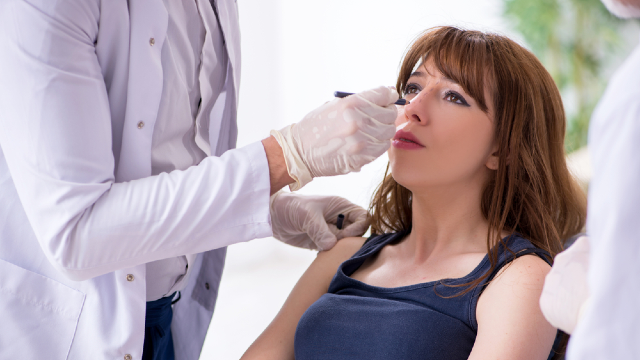
First question: is the nose finished?
A great deal of early dissatisfaction is dissatisfaction with an unfinished result, and it is worth taking seriously how long unfinished lasts.
Rhinoplasty results develop gradually as postoperative swelling resolves. The clinic describes initial swelling decreasing over the first few weeks, with the nasal contour continuing to refine for many months afterward — and for some noses the refinement continues beyond the first full year. Nothing about that is unusual or a sign that something has gone wrong. It is how the tissue behaves.
The tip is the slowest region to settle, and it is also the region most patients are watching most closely, which is an unfortunate combination. A tip that looks heavy at six weeks is a tip at six weeks, not a result.
So the first thing to establish is where in that curve you are standing. A complaint at three weeks and the identical complaint at nine months are different clinical statements, and they belong in different conversations.
This is not a reason to stay silent. It is a reason to separate reporting from judging. Report what you are seeing as soon as you see it; reserve your verdict for a point at which a verdict means something.
Four different things "unsatisfied" can mean
The word covers at least four distinct situations with four different routes. Working out which one you are in is most of the work.
One: it is not finished. Swelling has not resolved, and the shape you are looking at is not the shape you will keep. Route: time, documentation, and scheduled reassessment.
Two: something deviated from the plan. Asymmetry that has not evened out, a contour that does not match what was discussed, a graft that has become visible or palpable. Route: assessment, and possibly correction.
Three: the nose does not work properly. Breathing that is worse than before, persistent obstruction, altered sensation. Route: this is a clinical problem and it moves faster than the other three.
Four: the result matches the plan, and the plan was not what you wanted. The surgery did what it set out to do and you do not like the outcome. Route: the hardest conversation of the four, and the one that is decided long before the operation.
Patients often arrive at a clinic with the fourth and describe it as the second, or arrive with the first and describe it as the fourth. Sorting honestly is not a formality — it determines whether what you need is patience, an examination, urgent attention, or a conversation about expectations that should have happened earlier.
The functional case moves first
Take this one out of order, because it does not wait.
The clinic's disclosed risk list for its rhinoplasty procedures includes breathing difficulty, septal perforation, infection, poor wound healing and bleeding. Those are not aesthetic disappointments; they are findings, and some of them are time-sensitive.
If your nose is not working — obstructed on one side, obstructed at night, worse than before the operation — that is a clinical report rather than a complaint about appearance, and it should be made promptly and in those terms. The distinction matters because it changes how the message is triaged at the other end.
There is a structural point here worth knowing. Le.J Plastic Surgery is led by a board-certified otolaryngologist, and the clinic states that nasal function is weighed alongside facial proportions and three-dimensional balance when the nasal line is planned. A functional complaint arriving at an ENT-led nasal practice is arriving somewhere equipped to assess it, which is not true of every practice performing nose surgery.
MedlinePlus, the US National Library of Medicine's patient service, carries general material on nose disorders that is worth reading if you are trying to describe a breathing problem precisely rather than approximately. Precision here genuinely changes the quality of the answer you get back.
What to document, starting now
Whatever category you are in, the same evidence makes the conversation better. Assemble it before you write.
A photograph series in consistent conditions. Same light, same angles, same distance, no makeup, neutral expression. A single image is almost useless for this purpose; a series taken at intervals shows direction of travel, which is the single most diagnostic thing you can supply.
Your pre-operative photographs. The comparison is not against your memory of your old nose, which is unreliable in both directions.
The dates. Operation date, each appointment attended, when you first noticed whatever you are reporting, and whether it has changed since.
The operative record. What was performed, what tissue was taken and from where, what was placed. If you do not have this, ask for it — it is a record of your own body.
What was discussed beforehand. Your notes, the messages, anything written. This is the material that separates category two from category four, and it is the material nobody keeps.
Do that assembly before you compose the message rather than after the first reply asks for it. Across a nine-hour time difference, one missing item costs the better part of a day.
How to raise it so that it gets acted on
The framing of a first message shapes everything that follows, and there is a form that works.
Separate what you see from what you conclude. "The left side sits lower than the right and the difference has not changed in six weeks" can be assessed. "The surgery was done badly" cannot. Both may reflect the same underlying concern; only one gives someone something to examine.
State the timeline plainly. When it started, whether it has changed, in which direction.
Ask for an assessment rather than a remedy. Requesting a specific outcome at the first message compresses the diagnostic step and puts the conversation on commercial footing before anyone has established what is actually happening.
Attach the series. Photographs in a sequence, dated.
Keep it in one thread. The thread is your record. Five messages over three days are harder to work with and harder to refer back to than one considered message.
MedlinePlus's guidance on talking with your doctor makes the small point that carries the most weight here: write it down beforehand. A written concern cannot be misheard, and across a language boundary that advantage compounds.
What correction work actually involves
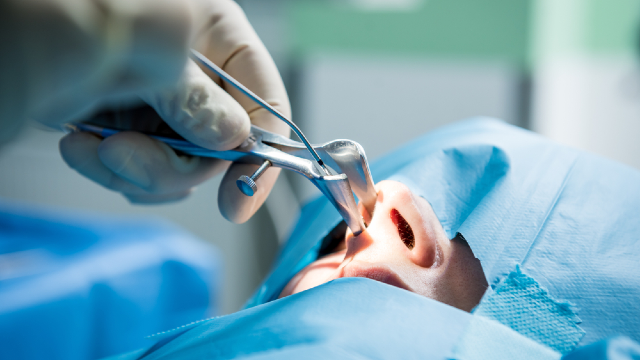
If assessment concludes that something should be corrected, it is worth knowing what that means in practice rather than picturing a repeat of the first operation.
Le.J Plastic Surgery performs correction work as a named category. Its Nostril Retraction Correction exists precisely to address a specific unwanted result — excessive nostril exposure and the appearance of an over-lifted nose — and the way the clinic describes it is instructive about correction generally.
The assessment is structured rather than impressionistic. How far the rim has retracted, and where. How it now sits in relation to the nostril. What state the supporting cartilage is in. Whether enough skin and lining remain to work with. Views from the front and in profile are then used to sort the deformity into a category, and the category is what narrows the choice of technique. Grafting enters where the correction needs added support or coverage.
Just as instructive is how much longer the disclosed outcome list is than the one for a first operation. Correction may be incomplete. The original problem can return. Grafted material may resorb, or end up detectable under the skin. Scarring, asymmetry and swelling are all named. And healing itself can work against the result, because scar tissue tightening as it matures is capable of drawing a corrected rim part of the way back.
That is what a second operation is. It is not an undo. It is a further operation on tissue that has already been altered once, with its own risk profile and its own possibility of an incomplete result — which is the strongest argument available for being unhurried about requesting one.
Why unhurried, specifically
Two reasons, and they are both about tissue rather than about patience as a virtue.
The first is that the result is still moving. Operating on a nose whose swelling has not resolved means operating without knowing what you are correcting, and the surgeon is aiming at a target that will have moved by the time the second result settles.
The second is that healing has to finish before it can be worked in. Scar maturation changes what the tissue does, and a correction planned during the active phase is planned against conditions that will not persist.
None of this means waiting in silence. Report early, document continuously, and let the assessment decide when the nose is ready to be judged — and, if it comes to it, when it is ready to be operated on again.
The conversation that prevents category four
The fourth situation — the operation did what was planned and you do not like the result — cannot be fixed afterward by anything on this page. It is prevented, if at all, before surgery.
The prevention is unglamorous. Describe the complaint rather than naming a procedure, so that the plan is built around what actually bothers you. Ask what the proposed operation would not achieve, which is the single most useful question available and the one most rarely asked. Ask what would make the surgeon advise against it. Establish what a good outcome looks like in words you both understand, rather than in an image of somebody else's face.
The clinic's stated philosophy is to analyze each individual's anatomy and design an approach around it, aiming to preserve the patient's own characteristics. That framing is a constraint as well as a promise: an operation planned that way is planned to produce your nose, improved, and not a different nose. A patient hoping for the second and consenting to the first is heading for category four regardless of how well the surgery goes.
The American Academy of Dermatology publishes a list of questions worth asking before any cosmetic treatment, and it is a reasonable cross-check against your own — if something on theirs is missing from yours, add it before you travel rather than after.
What to establish before surgery about this exact scenario
Four questions, asked before you book anything. All four are reasonable, and how they are answered is itself information.
At what point would you consider the result final? This anchors every later conversation and prevents a dispute about whether the nose is finished.
If I am unhappy at that point, what is the process? Ask for the sequence: who assesses it, how, and on what evidence.
How would that assessment happen if I am in the United States? Establish the mechanics before you need them.
What would you want me to send? Ask now, so that you are photographing correctly from week one rather than assembling a series retrospectively.
Write the answers down and keep them with your operative record. Their value is not that they bind anyone; it is that a conversation nobody has had before is much harder than one both sides have already sketched.
The three moments where this is decided
Step back and the whole subject collapses into three points in time, only one of which most patients are thinking about.
Before the operation. This is where category four is decided, in full — by how the complaint was described, whether limits were named, and whether the plan and the wish were the same object. Nothing after this point can repair a mismatch here. It is also where the process for later is established, at the cost of four questions.
The first six weeks. This is where documentation is decided. A photograph series begun on day three is worth more than any later reconstruction, and it is unrecoverable — you cannot go back and take week one's picture in month four. This is also the window where the functional complaints announce themselves, and where speaking early costs nothing and waiting costs a great deal.
The assessment point. This is where the outcome is decided, and it arrives months after you have flown home. By then the swelling has resolved enough for the shape to be real, the record exists or does not, and the conversation either has a structure agreed in advance or has to invent one under pressure.
Notice that two of the three happen before there is anything to be unhappy about. That is the actual answer to the question in this page's title: what happens if you are unsatisfied depends overwhelmingly on decisions taken while you were still satisfied, and the leverage you have over it is nearly all spent in advance.
Which is why this belongs in the pre-surgery conversation rather than in a search afterward. Raise it on the contact page with your other questions, before you book. If you want a realistic sense of what correction work produces, the published before-and-after gallery has a nose revision category of its own, and second operations are a fairer thing to look at there than first ones.
The Bottom Line
- An unsatisfactory nasal appearance and the possibility of further surgery are both on the clinic's own disclosed risk list, stated before you consent.
- "Unsatisfied" covers four different situations — unfinished, deviated from plan, functionally wrong, or planned-as-delivered-but-unwanted — and they have four different routes.
- A functional complaint moves first and should be reported as a clinical finding rather than as dissatisfaction with appearance.
- Document from week one with a dated photograph series in consistent conditions; direction of travel is the most diagnostic thing you can supply.
- Correction surgery is a further operation on altered tissue with its own disclosed risks, including incomplete correction and recurrence — it is not an undo.
Frequently Asked Questions
Does the clinic acknowledge that patients can be unhappy with a result?
Yes. An unsatisfactory nasal appearance appears on its disclosed list of possible complications for its rhinoplasty procedures, together with the possibility of further surgery.
How long should I wait before judging my result?
Longer than feels natural. Initial swelling decreases over the first few weeks while the contour continues refining for many months, and for some noses beyond the first year. Say what you are seeing straight away; hold the verdict.
Which part of the nose takes longest to settle?
The tip, which is also the part most patients watch most closely. A heavy-looking tip in the early weeks is not yet a result.
What if my breathing is worse after surgery?
Report it promptly and describe it as a functional finding rather than a complaint about appearance. Breathing difficulty is on the clinic's disclosed risk list and does not wait for the aesthetic timeline.
What should I send when I raise a concern?
A dated photograph series in consistent conditions, your pre-operative photographs, the dates involved, the operative record, and whatever was written down before surgery about the plan.
How should I word the first message?
Separate what you see from what you conclude, state the timeline, ask for an assessment rather than a specific remedy, and keep everything in one thread.
Is revision surgery a way to undo the first operation?
No. It is a further operation on tissue that has already been altered, and its disclosed outcomes include incomplete correction, recurrence, graft resorption and asymmetry.
What should I ask about this before I book?
At what point the result would be considered final, what the process is if you are unhappy then, how that assessment works from the United States, and what the clinic would want you to send.
This article is for general informational purposes and does not constitute individualized medical advice, and it describes no clinic policy or entitlement. It is not a self-diagnosis tool. Any assessment of a surgical result can only be made by a qualified surgeon who has examined you in person.
References
- MedlinePlus — Plastic and Cosmetic Surgery
- MedlinePlus — Nose Injuries and Disorders
- MedlinePlus — Talking With Your Doctor
- MedlinePlus — Patient Rights
- American Academy of Dermatology — Best questions to ask when considering a cosmetic treatment
- MedlinePlus — Scars
- MedlinePlus — After Surgery
Ready for a Personalized 1:1 Consultation?
Dr. Kim Ji Sun personally conducts every consultation, surgical plan, and follow-up at Le.J Plastic Surgery in Gangnam, Seoul.