Personalized Rhinoplasty & Facial Aesthetics in Gangnam, Seoul · Tel: +82-2-6954-1988
en-US

MEDICAL ARTICLE & INSIGHTS
Functional vs Aesthetic Rhinoplasty: Breathing and Shape
Can nose surgery improve breathing as well as appearance? How Le.J Plastic Surgery assesses nasal function alongside aesthetic goals in surgical planning.

Functional vs Aesthetic Rhinoplasty: Why Breathing Matters as Much as Appearance
Medically reviewed by Dr. Kim Ji Sun, M.D., Ph.D., Board-Certified Otolaryngologist
Functional rhinoplasty addresses how the nose works; aesthetic rhinoplasty addresses how it looks. They are usually presented as separate operations, but they act on the same small set of structures, which is why one can affect the other. At Le.J Plastic Surgery in Seoul, nasal function is assessed alongside aesthetic goals during planning, and the reason has to do with the training of the doctor performing the surgery.
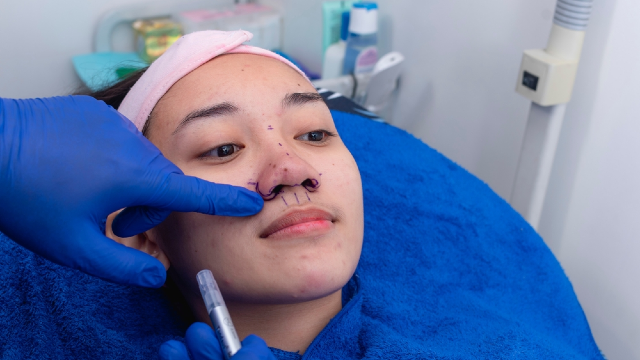
The same structures do both jobs
A nose is not a shape with an airway inside it. The shape is the airway.
The StatPearls anatomy review, published by the US National Library of Medicine, divides the external nose into an upper bony third, a cartilaginous middle vault, and a cartilaginous lower third. The middle vault is where function and appearance collide most directly: the upper lateral cartilages there fuse with the septum to hold up the mid-dorsum, and the same reference names the nasal valve as the flow-limiting segment governing airflow on both sides of the nose. Three structures form its borders: that upper lateral cartilage, the septum beside it, and the leading end of the inferior turbinate.
Narrowing the middle third changes its appearance. It also changes the nasal valve. That is the whole argument for assessing function during aesthetic planning, and it is a structural argument rather than a philosophical one.
StatPearls adds that the septum is the main foundational structure of the external nose, supporting the dorsum, the columella, and the tip, while dividing the cavity into two passages that allow smooth airflow and warm and humidify the air breathed in. The turbinates on the side walls perform the humidifying and warming.
What "functional" means clinically
Functional nasal surgery has a defined threshold, and it is not a matter of preference.
StatPearls describes septoplasty as one of the most commonly performed procedures in otorhinolaryngology and plastic surgery, and explicitly as functional rather than purely aesthetic surgery, with its main indication being septal deviation causing symptomatic nasal airway obstruction. Deviation reduces the cross-sectional area of the nasal valve, producing a sensation of blockage, and trauma is the commonest cause. Patients often notice obstruction most on exertion or during exercise.
Crucially, StatPearls states that patients must be symptomatic with nasal blockage to warrant functional surgery, and describes the Nasal Obstruction Symptom Evaluation scale — the NOSE scale — as a validated instrument for grading obstruction, noting that people with low scores are unlikely to benefit from surgery.
The American Society of Plastic Surgeons makes the same connection from the patient-facing side, stating that rhinoplasty can also correct impaired breathing caused by structural defects, that surgery intended to improve an obstructed airway requires careful evaluation of the nasal structure in relation to airflow and breathing, and that correcting a deviated septum — one of the commonest causes of impaired breathing — is achieved by adjusting the nasal structure into better alignment.
A deviated septum visible on examination is therefore not by itself a reason to operate. Symptoms are.
What functional surgery can achieve
The magnitude of the improvement has been measured.
StatPearls reports that septoplasty with turbinoplasty lowers NOSE scores by an average of 40 points, and that adding spreader grafting to septoturbinoplasty increases the average reduction to 49 points. Reduction of the septal swell body has been shown to improve airflow as well, lowering NOSE scores by between 20 and 45 points on average depending on patient selection.
It also notes benefits that patients rarely anticipate. Sense of smell tends to improve, if subtly. In certain cases snoring and obstructive sleep apnea may improve. People with allergic rhinitis see improvements in nasal airflow comparable to those without it, and the same reference suggests rhinoplasty may be a useful adjunct where maximal medical management has not relieved obstruction sufficiently.
MedlinePlus, the patient-education service of the US National Library of Medicine, includes relief of nasal breathing problems among the reasons rhinoplasty is performed, alongside changing the size of the nose, the shape of the tip or bridge, the width of the nostril openings, and the angle between nose and upper lip. It also lists worsening of nasal breathing among the risks of the procedure — which is the other half of why function belongs in the planning conversation.
Why the surgeon's specialty is relevant here
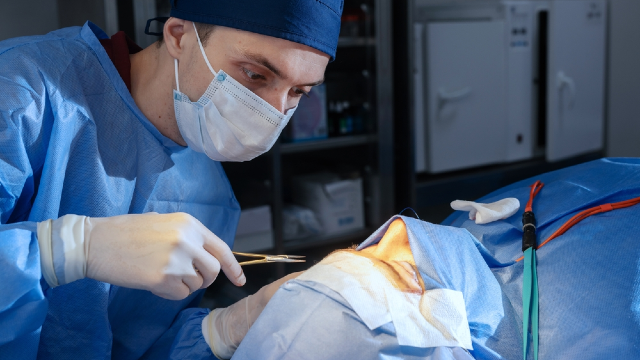
Two different training routes lead to the same operation, and they emphasize different things.
StatPearls notes that rhinoplasty is typically performed by an otolaryngologist, a facial plastic surgeon, or a plastic surgeon, and that some oral-maxillofacial surgeons are trained to perform it as well. Those routes share the operation and differ in what they spend the most years looking at.
Dr. Kim Ji Sun, who leads Le.J Plastic Surgery, is a board-certified otolaryngologist. His qualifications include an M.D., a master's degree, and a Ph.D. from Dankook University College of Medicine, with internship and residency training at Dankook University Hospital and a clinical fellowship in otorhinolaryngology at Asan Medical Center. He was invited to speak on functional rhinoplasty at Seoul National University Hospital's rhinoplasty training program in 2021.
Le.J Plastic Surgery lists functional rhinoplasty and ENT-informed nasal surgery among its core areas of specialization, and describes its surgical planning as taking into account facial proportions, three-dimensional appearance, and functional nasal factors. Its CellFix-Nose technique is described as a closed nasal-tip procedure that includes functional considerations, and its approach to rhinoplasty generally is described as personalized nasal reshaping based on individual anatomical structure, facial proportions, and functional considerations.
The clinic states that its board-certified otolaryngologist considers both the aesthetic and the functional aspects of the nose during the procedure.
What this changes in a consultation
Practically, it changes the questions asked before anything is planned.
An assessment that includes function will ask whether you have difficulty breathing through either side, whether it is worse on one side, whether it worsens with exertion, whether it affects your sleep, and whether there is a history of nasal injury. It will examine the septum and the internal valve area, not only the external contour.
That matters most for people whose stated goal is purely cosmetic. Someone who has breathed through a partially obstructed nose their whole life often does not describe it as a problem, because they have nothing to compare it with. It surfaces only when asked about directly.
It matters in the other direction too. StatPearls is explicit that appropriate patient selection is crucial to maximizing outcomes in functional surgery, and that people with low obstruction scores are unlikely to benefit. An honest functional assessment sometimes concludes that a functional procedure is not indicated.
Combining the two
Where both a functional and an aesthetic concern exist, they are often addressed together.
StatPearls records that a septoplasty may be combined with a rhinoplasty, with turbinate surgery, or with endoscopic sinus surgery, sometimes for the practical reason that it opens up the exposure the surgeon needs. Recovery from it, the same review notes, usually takes a few weeks, and serious complications are rare.
Le.J Plastic Surgery describes its own nasal work as considering internal nasal function alongside facial proportions — its closed rhinoplasty is described as correcting from the bridge through the tip while taking internal nasal function and facial proportions into account. Whether a functional component belongs in your plan is a clinical decision made against your anatomy and your symptoms, not a menu choice.
Le.J Plastic Surgery also names breathing difficulty among the risks it discloses for rhinoplasty. A surgeon who raises that risk before you ask is treating function as part of the operation rather than as an afterthought.
If you are planning from the United States
Two of the questions Le.J Plastic Surgery identifies as most common among prospective US patients are whether surgery will affect breathing and whether appearance and nasal function can both be addressed. Both are answerable in advance.
An online consultation before travel allows your symptoms, your history, and your goals to be discussed while you are still at home, which is also when it is easiest to gather any prior imaging or records. Requests are made through the clinic's consultation page. The clinician's background and the practice's approach to nasal surgery are described on the clinic's about page.
The Bottom Line
- The structures that give the nose its shape are the same ones that govern airflow, so aesthetic changes can affect breathing.
- StatPearls identifies the nasal valve as the flow-limiting segment that directly influences airflow on both sides of the nose.
- Functional surgery requires symptoms: StatPearls states patients must be symptomatic with nasal blockage, and that low NOSE scores predict little benefit.
- Le.J Plastic Surgery is led by a board-certified otolaryngologist who was invited to speak on functional rhinoplasty at Seoul National University Hospital's rhinoplasty training program in 2021.
- Nasal function and facial proportion are assessed together during surgical planning at the clinic.
Frequently Asked Questions
Can one operation improve both breathing and appearance?
The structures involved overlap, so they are frequently addressed together. StatPearls notes that septoplasty can be performed alongside or in addition to rhinoplasty or turbinoplasty. Le.J Plastic Surgery describes its planning as accounting for facial proportions, three-dimensional appearance, and functional nasal factors together.
What is the nasal valve, and why does it matter?
StatPearls defines it by its three borders — upper lateral cartilage, septum, and the leading end of the inferior turbinate — and calls it the flow-limiting part of the nose, the point that governs how much air moves through either side. Because it sits in the middle third, changes to that area affect breathing as well as profile.
Does a deviated septum always need surgery?
No. StatPearls states that patients must be symptomatic with nasal blockage to warrant functional surgery, and that the validated NOSE scale is used to grade obstruction, with low scores indicating that surgery is unlikely to help. A deviation seen on examination is not by itself an indication.
How much can functional surgery improve breathing?
StatPearls reports that septoplasty with turbinoplasty lowers NOSE scores by an average of 40 points, rising to an average of 49 points when spreader grafting is added, while septal swell body reduction lowers scores by 20 to 45 points on average depending on patient selection.
Why does it matter that the surgeon is an ENT specialist?
StatPearls notes that rhinoplasty is typically performed by an otolaryngologist, a facial plastic surgeon, or a plastic surgeon. Dr. Kim Ji Sun is a board-certified otolaryngologist, and was invited to speak on functional rhinoplasty at Seoul National University Hospital's rhinoplasty training program in 2021.
Can rhinoplasty make my breathing worse?
It is a recognized risk. MedlinePlus lists worsening of nasal breathing among the risks of the procedure, and Le.J Plastic Surgery names breathing difficulty among the risks it discloses for rhinoplasty. This is the reason function is assessed during planning rather than assumed.
What should a functional assessment cover?
Whether you have difficulty breathing through either side and whether it is worse on one, whether it worsens on exertion, whether it affects sleep, and whether there has been any nasal injury — StatPearls names trauma as the commonest cause of septal deviation. Examination should include the septum and the internal valve area, not only the external contour.
Are there benefits beyond breathing more easily?
StatPearls records that sense of smell tends to benefit subtly after rhinoplasty, and that snoring and obstructive sleep apnea may improve in certain cases. It also notes that people with allergic rhinitis gain improvements in nasal airflow comparable to those without it.
This article is for general informational purposes and does not constitute individualized medical advice. It is not a self-diagnosis tool. Surgical candidacy, technique, and expected outcomes can only be determined through a consultation with a qualified surgeon.
References
- StatPearls: Septoplasty
- StatPearls: Rhinoplasty
- StatPearls: Anatomy, Head and Neck, Nose
- MedlinePlus: Rhinoplasty
- ASPS: Rhinoplasty
Ready for a Personalized 1:1 Consultation?
Dr. Kim Ji Sun personally conducts every consultation, surgical plan, and follow-up at Le.J Plastic Surgery in Gangnam, Seoul.