Personalized Rhinoplasty & Facial Aesthetics in Gangnam, Seoul · Tel: +82-2-6954-1988
en-US

MEDICAL ARTICLE & INSIGHTS
Fore-fting Forehead Lift: What the Four Effects Treat
Fore-fting at Le.J Plastic Surgery lifts the sagging forehead in one to one and a half hours, addressing forehead lines, frown lines, brow position and hooding.
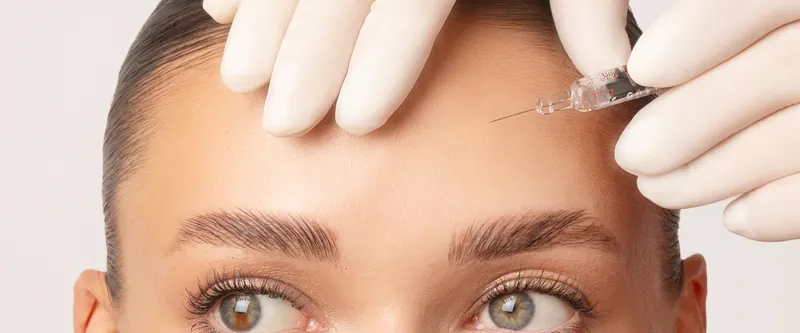
Fore-fting (Forehead Lift) at Le.J Clinic: What the Four-Effect Lift Actually Treats
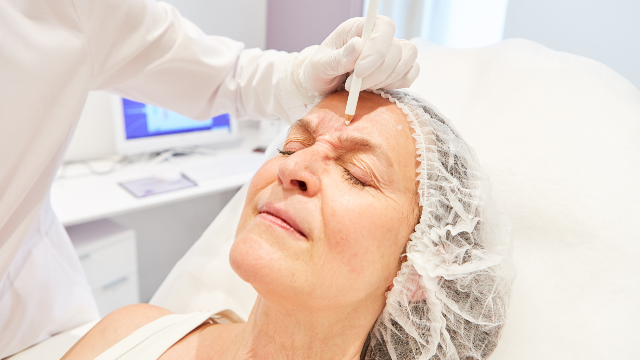
Medically reviewed by Dr. Kim Ji Sun, M.D., Ph.D., Board-Certified Otolaryngologist
Fore-fting is Le.J Plastic Surgery's forehead lift: a procedure that raises the sagging forehead and, in the clinic's framing, produces four separate rejuvenating effects rather than one. It takes approximately one hour to one and a half hours, and everyday recovery begins once the stitches are out. The reason a forehead lift produces several effects at once is that the forehead is a single sheet of tissue, and almost everything that troubles people about the upper face — lines, frown creases, low brows, heavy upper lids — is downstream of where that sheet sits.
The four things a forehead lift changes
Le.J Plastic Surgery presents Fore-fting as delivering four effects through lifting of the sagging forehead. Set against what a forehead lift is understood to do, those effects are:
- Horizontal forehead lines soften, because they are produced by the forehead muscle working to hold a descending brow up.
- Frown lines between the brows reduce.
- Sagging eyebrows are raised into a more youthful position.
- Upper-eyelid hooding caused by brow descent is reduced, because the skin creating the hood is pulled up from above rather than cut away from below.
That fourth effect is the one most often misattributed. MedlinePlus, the patient-education service of the U.S. National Library of Medicine, describes a forehead lift as correcting sagging skin of the forehead, the brows and the upper eyelids together — the upper eyelid is part of what the operation addresses, not a separate problem.
The StatPearls chapter on direct brow lift, published on the National Library of Medicine's Bookshelf, puts the mechanism plainly: brow descent produces hooding at the outer part of the eyelid, and when it is severe it can obstruct the upper visual field. So heavy upper lids are sometimes an eyelid problem, and sometimes a brow problem wearing an eyelid disguise. Which one you have determines which operation helps.
Why the forehead sags in the first place
Two processes combine.
The NIH National Institute on Aging, whose material underpins the MedlinePlus page on skin aging, notes that skin thins and loses fat over time. Less underlying volume and thinner tissue mean less support, and the forehead is a broad, mobile area with gravity acting on it continuously.
The second process is muscular. StatPearls records that the frontalis is the only muscle that elevates the brow — everything else in the region pulls it down. When the brow starts to descend, the frontalis compensates by contracting more, and sustained contraction is precisely what etches horizontal lines into the forehead skin. The lines and the low brow are not two problems; they are one problem and its symptom.
There is also a reasonably well-defined timetable. The StatPearls chapter on direct brow lift records that brow ptosis — the medical term for a dropped brow — increases steadily from around the age of 50.
Where Fore-fting sits among forehead-lifting techniques
A forehead lift is not a single operation, and the approaches differ in where the incision goes and how much elevation they achieve.
StatPearls lists the menu as endoscopic, hairline or pretrichial, coronal, midforehead, and direct approaches, and notes a trade-off that rarely appears in marketing material: the endoscopic technique delivers only a few millimeters of elevation. Le.J Plastic Surgery's own description of forehead and brow rejuvenation covers the same ground, listing endoscopic, coronal and hairline-incision techniques and stating that the right approach depends on the brow position you want, the characteristics of your forehead, and the goals of the surgery.
The endoscopic route dominates the field. The StatPearls chapter on endoscopic brow lift records that the technique was first described by Nicanor Isse in 1994 and that more than half of brow rejuvenation procedures are now performed endoscopically. MedlinePlus describes the endoscopic variant as using several small cuts rather than one long one.
It is not universally suitable. StatPearls notes that endoscopic lifting suits a short forehead and is poorly suited to a receding hairline or a convex forehead — which is a matter of geometry rather than preference, and one of the things a consultation is for.
Surgical lifting of the face generally works the same way, technique-wise. The StatPearls chapter on cervicofacial rhytidectomy describes facelifting not as one operation but as a family of defined anatomic techniques, which is worth knowing if you are weighing a forehead lift against a broader lift.
What the procedure involves
The sequence Le.J Plastic Surgery describes is straightforward: the forehead and brow area are accessed through the selected surgical approach, the forehead tissues are lifted, the tissues or muscles are adjusted as required, and the incisions are closed with sutures, skin adhesives or clips.
The listed surgical time is approximately one hour to one and a half hours.
Planning happens before any of that. The consultation evaluates your goals, medical history, general health, facial characteristics, and the position of your brows and forehead — the last of which is what actually determines the technique.
Recovery, week by week
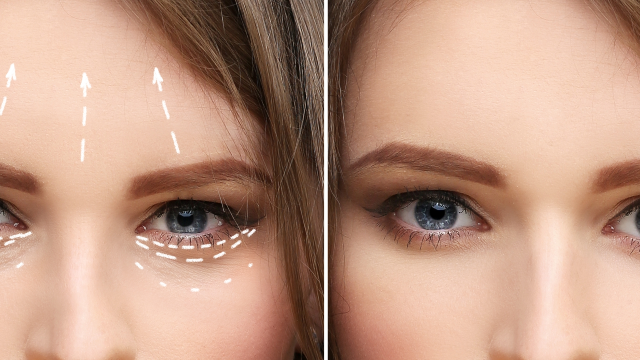
Le.J Plastic Surgery describes initial wound healing as generally taking about 10 to 14 days, with return to work and normal activity commonly possible after that period. Swelling continues to improve over the following weeks, and complete healing takes several months. Everyday recovery is listed as beginning after stitch removal.
MedlinePlus fills in the practical detail. It describes the head being kept raised for two to three days after surgery, stitches or clips removed within 10 to 14 days in two stages rather than all at once, return to work within about 10 days, contact sports avoided for six to eight weeks, and most visible signs of the operation fading within two to three months.
StatPearls adds the endoscopic-specific version: the head kept elevated for a week and vigorous activity avoided for two.
The clinic's aftercare instructions line up with all of that — keep the head elevated, avoid vigorous physical activity as instructed, follow wound-care instructions, take prescribed medications as directed, and attend the scheduled follow-up appointments.
Risks, and the one that sounds worse than it is
Le.J Plastic Surgery lists the potential risks as bleeding, infection, facial asymmetry, facial nerve injury, numbness or altered skin sensation, pain, poor wound healing, hair loss around the incision, unfavorable scarring, an elevated hairline, fluid accumulation, eye irritation or dryness, skin loss, and the possibility of revision surgery.
StatPearls identifies the most frequent complications of endoscopic brow lifting as paresthesia — altered sensation — along with asymmetry, alopecia at the incision, lagophthalmos, which is difficulty closing the eye completely, and the need for revision. It also makes a distinction that matters: temporary nerve weakness is far more common than permanent paralysis.
Two contraindications are worth raising specifically, because patients do not always think to mention them. StatPearls lists previous eyelid surgery and a history of dry eye among the contraindications for brow lifting. Both change the calculation, and both are easy to forget to mention if nobody asks.
The American Academy of Dermatology's framing of cosmetic treatment safety applies here as much as to anything non-surgical: these are medical procedures and carry medical risk, and asking questions before you agree to one is itself a way of lowering that risk.
What a forehead lift does not do
It does not stop aging. StatPearls puts it directly in the context of brow lifting: the aging process continues after any lift. Le.J Plastic Surgery makes the same point about facial lifting in general — the results are long-lasting, but the face carries on aging around them.
Le.J Plastic Surgery notes that healthy habits and long-term sun protection help maintain a rejuvenated appearance, which is not a throwaway line: sun exposure is one of the main drivers of the skin changes that made the lift worth having.
Who is a candidate
Le.J Plastic Surgery describes suitable candidates as people who are physically healthy, do not smoke, hold realistic expectations, and are troubled by forehead wrinkles, frown lines or sagging eyebrows. People with medical conditions that make surgery unsafe, uncontrolled health problems, or expectations the operation cannot meet are not suitable.
A forehead lift can also be combined with upper or lower eyelid surgery, facelift surgery, or skin resurfacing where several areas of facial aging are being addressed at once. Whether that makes sense for you is a consultation question.
Le.J Plastic Surgery is located at 134 Dosan-daero in the Gangnam district of Seoul, and sees patients Monday to Friday and on Saturday. International patients can open a consultation online before traveling; requests go via the contact page, and the about page describes how personalized facial surgery is approached here.
The Bottom Line
- Fore-fting is Le.J Plastic Surgery's forehead lift, presented as producing four rejuvenating effects through lifting of the sagging forehead.
- The listed surgical time is approximately one hour to one and a half hours, with everyday recovery beginning after stitch removal.
- Initial wound healing takes about 10 to 14 days; complete healing takes several months.
- Heavy upper eyelids are sometimes caused by brow descent rather than by the eyelid itself, which is what makes a lift from above the right operation for some people and the wrong one for others.
- Previous eyelid surgery and a history of dry eye are recognized contraindications for brow lifting and should be raised at consultation.
Frequently Asked Questions
What are the four effects of Fore-fting?
Le.J Plastic Surgery presents Fore-fting as producing four rejuvenating effects through lifting of the sagging forehead. A forehead lift reduces horizontal forehead lines and frown lines, raises sagging eyebrows into a more youthful position, and reduces the upper-eyelid hooding that brow descent creates.
How long does the operation take?
Approximately one hour to one and a half hours. Le.J Plastic Surgery lists everyday recovery as beginning after stitch removal, with initial wound healing generally taking about 10 to 14 days.
Do I need a forehead lift or eyelid surgery?
That depends on where the heaviness comes from. StatPearls notes that brow descent produces hooding at the outer upper eyelid and, when severe, can obstruct the upper field of vision. When the brow is the cause, lifting it addresses the hood; when the eyelid itself is the cause, it does not. The assessment at consultation distinguishes them.
When can I go back to work?
MedlinePlus describes return to work within about 10 days after a forehead lift, with stitches or clips removed within 10 to 14 days in two stages. Le.J Plastic Surgery similarly describes return to work and normal activity as commonly possible after the initial 10-to-14-day healing period.
When can I exercise again?
Not immediately. MedlinePlus advises avoiding contact sports for six to eight weeks after a forehead lift, and StatPearls describes vigorous activity being avoided for two weeks after endoscopic lifting. Your own restrictions come from your surgical team and depend on the approach used.
How long do the results last?
Le.J Plastic Surgery describes facial lifting results as long-lasting while noting that the face continues to age naturally afterward — StatPearls makes the same point about brow lifting specifically. Sun protection and healthy habits help maintain the result over time.
Is the endoscopic approach suitable for everyone?
No. StatPearls records that the endoscopic technique now accounts for more than half of brow rejuvenation procedures and that it was first described by Nicanor Isse in 1994, but also that it delivers only a few millimeters of elevation and is poorly suited to a receding hairline or a convex forehead. The approach follows your forehead, not the other way round.
This article is for general informational purposes and does not constitute individualized medical advice. It is not a self-diagnosis tool. Surgical candidacy, technique, and expected outcomes can only be determined through a consultation with a qualified surgeon.
References
- MedlinePlus: Forehead Lift
- MedlinePlus: Skin Aging
- StatPearls: Endoscopic Brow Lift (NCBI Bookshelf)
- StatPearls: Direct Brow Lift (NCBI Bookshelf)
- StatPearls: Cervicofacial Rhytidectomy (NCBI Bookshelf)
- American Academy of Dermatology: Cosmetic Treatment Safety
Ready for a Personalized 1:1 Consultation?
Dr. Kim Ji Sun personally conducts every consultation, surgical plan, and follow-up at Le.J Plastic Surgery in Gangnam, Seoul.