Personalized Rhinoplasty & Facial Aesthetics in Gangnam, Seoul · Tel: +82-2-6954-1988
en-US

MEDICAL ARTICLE & INSIGHTS
Closed Rhinoplasty Recovery: The First Two Weeks, Day by Day
A day-by-day guide to the first two weeks after closed rhinoplasty at Le.J Plastic Surgery, and how to plan a trip around the clinic's follow-up schedule.

Recovery Timeline After Closed Rhinoplasty: Day-by-Day Guide for the First Two Weeks
Medically reviewed by Dr. Kim Ji Sun, M.D., Ph.D., Board-Certified Otolaryngologist
The closed rhinoplasty recovery timeline that matters for planning is not the one measured in months. It is the fortnight between the operation and the point at which you can reasonably board a flight home. Le.J Plastic Surgery in Seoul sets its early milestones within that window, and this guide walks through what each stage of it involves and what it asks of you.
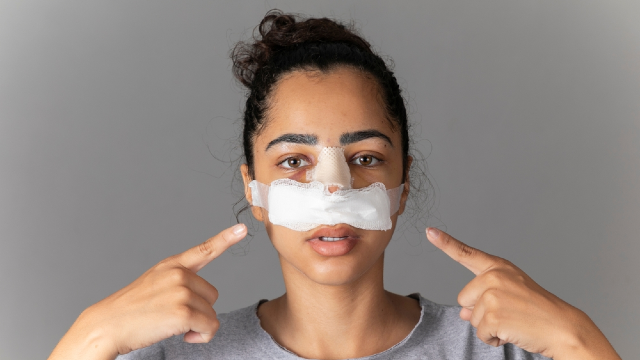
A note on what "recovery" means here
Two meanings get mixed together and cause most of the disappointment.
There is the point at which you can return to ordinary daily life, and there is the point at which healing is complete. Le.J Plastic Surgery locates the first of these early, tying the return to everyday activity to its own early milestones. Complete healing is a much longer process and is not what the first fortnight is about.
This guide is about the first meaning. It is the planning horizon: how long to stay, when the follow-up visits fall, and when normal activity resumes.
Days 1 and 2: the low point
Expect to feel worse before better, and expect that to be normal.
The general case is set out by MedlinePlus on a page it credits to the Agency for Healthcare Research and Quality: after an operation you will have some side effects, pain among them, together with swelling and soreness around the area that was cut. It keeps complications in a separate category — unplanned events linked to the operation, not part of its expected course.
For nasal surgery specifically, MedlinePlus notes that some bleeding is expected after the procedure. StatPearls, a peer-reviewed reference in the National Library of Medicine's collection, makes the same point in stronger terms: postoperative bleeding after rhinoplasty is common and should not necessarily be counted as a complication unless it fails to settle and cannot be controlled at home. It adds that such bleeding tends to be mild and usually resolves with head elevation and decongestant sprays.
Head elevation is the practical takeaway from those two days. Keeping the head raised, including while sleeping, is one of the few things within your control that measurably helps.
Le.J Plastic Surgery describes its postoperative care as including disinfection, injection therapy, and swelling care to support recovery and help manage swelling and discomfort.
Day 3: the first milestone
Le.J Plastic Surgery removes the nasal taping on the third day after closed rhinoplasty, and describes everyday recovery as beginning once it comes off.
That is genuinely a turning point in how you look and feel, and it is also the point most likely to be misread. The nose visible on day 3 is a swollen nose. Le.J Plastic Surgery states directly that changes in nasal contour may be visible once the initial taping is removed but that swelling can temporarily affect the appearance, and that the final appearance should be evaluated after sufficient healing rather than in the early postoperative period.
Treat day 3 as the moment ordinary life resumes, not the moment the result arrives.
Days 4 to 6: quiet maintenance
There is little to do in this stretch beyond not undoing the work.
The clinic's aftercare list for this period is short and dull, which is its virtue. Keep the nose shielded while it repairs, do what the written instructions say, keep an eye on the surgical site, and turn up to the appointments you have been given.
Bruising and congestion are the two symptoms that dominate. Congestion can persist well past the point at which the outside of the nose looks settled, and it does not indicate a problem with the surgery.
Underneath, something specific is happening. The StatPearls review of how wounds heal records that fibroblasts begin laying down new collagen and glycosaminoglycans by roughly the fifth to seventh day after an injury, and that surface healing proceeds by cells migrating in from the edges, with a thin layer laid down first and a thicker, more durable one bridging the area later. That is the biological reason the middle of the first week feels like a change of gear.
Day 7: the second milestone
At Le.J Plastic Surgery, stitches at the cartilage-harvesting site are removed on the seventh day after closed rhinoplasty.
This is the appointment that anchors an international patient's schedule. It is a clinic visit, which means being in Seoul for it, and it is the reason a trip built around the operation alone is too short.
Le.J Plastic Surgery is explicit about the implication: an international patient may need to plan a stay around the postoperative review and stitch removal rather than assuming the procedure is fully recovered after the first few days. The clinic notes that there is no single stay requirement for every rhinoplasty, and that the appropriate duration depends on the procedure, on swelling, on wound care, on dressing removal, and on the surgeon's follow-up schedule. For international patients it suggests that planning around ten to fourteen days provides flexibility for postoperative review, while some procedures may need less time and some more.
The second week: function returns before appearance

By the start of the second week most people are functioning normally and still do not look like themselves.
Le.J Plastic Surgery describes its closed rhinoplasty timeline as one in which initial swelling decreases over the first few weeks. Bruising fades on a similar schedule. What remains is a degree of puffiness that is obvious to you and frequently invisible to other people.
Physical activity is the judgment call in this week. Le.J Plastic Surgery locates everyday recovery after the early milestones, but everyday activity and strenuous exercise are not the same category, and the interval before resuming the second is longer. This is a question to put to the clinic against your own procedure rather than to settle from a general rule.
A realistic summary of the fortnight:
- Days 1–2: swelling and discomfort peak; head elevation; rest.
- Day 3: taping removed; everyday recovery begins; appearance still swollen.
- Days 4–6: protect the site, follow aftercare, attend appointments; congestion persists.
- Day 7: stitches removed at the cartilage-harvesting site; follow-up review.
- Days 8–14: function largely normal; residual swelling continues to settle; travel becomes reasonable for most schedules.
Planning the trip around the schedule, not the surgery
The single most useful planning rule is to book the return flight against the follow-up calendar rather than the operation date.
Le.J Plastic Surgery states that international patients should confirm their individual follow-up and travel schedule with the clinic, and that follow-up runs through its own consultation system. Agreeing before departure how postoperative contact will work is straightforward while you are at home and awkward once you are in an airport.
MedlinePlus suggests a set of questions to ask a surgeon before any operation, and two are directly relevant here: when you can go back to work, and when it is all right to start exercising again. Both have answers specific to your procedure, and both are better asked in advance.
The American Society of Plastic Surgeons publishes a similar checklist aimed specifically at rhinoplasty recovery, which asks patients to establish in advance where they will be taken after surgery, what medication they will be given, whether there will be dressings and when those come off, whether stitches are removed and when, and when normal activity and exercise can resume. Those are exactly the items that turn into anxious international phone calls when they are left unasked.
An online consultation before travel lets the surgical plan and the schedule be discussed together. Requests go through the clinic's consultation page, and the practice describes its approach to nasal surgery on its about page.
When to make contact rather than wait
Most of the fortnight is uneventful. A few things are not, and knowing them removes the guesswork.
One of them has a name worth knowing. StatPearls describes a septal hematoma — blood pooling under the lining on either side of the septum — as a tender, discolored swelling that can come with fever, a lost sense of smell, and blocked airflow, and stresses that it needs draining quickly, because left alone it invites infection and can destroy septal cartilage. Infection after rhinoplasty, the same review notes, tends to declare itself early, and milder cases usually respond to antibiotics.
MedlinePlus lists bleeding, infection, or bruising among the general risks of surgery, and reactions to medicines and problems breathing among the risks of anesthesia. Le.J Plastic Surgery's own disclosures run wider still, covering infection, altered skin sensation, difficulty breathing, perforation of the septum, scarring or wounds that heal poorly, swelling, a nasal appearance the patient is unhappy with, and the chance that a further operation proves necessary.
Bleeding that will not settle, escalating rather than easing pain, fever, or a sudden change in breathing are reasons to contact the clinic rather than wait for the next scheduled visit.
The Bottom Line
- Le.J Plastic Surgery removes nasal taping on day 3 after closed rhinoplasty and describes everyday recovery as beginning then.
- Stitches at the cartilage-harvesting site come out at the day 7 review, which is the appointment that anchors an international schedule.
- The clinic suggests that planning around ten to fourteen days gives international patients flexibility for postoperative review.
- The nose seen in the first fortnight is a swollen nose; the clinic states the final appearance should be judged after sufficient healing.
- Book the return flight against the follow-up calendar rather than the operation date.
Frequently Asked Questions
When does the nasal taping come off?
Le.J Plastic Surgery removes the taping on day 3 after closed rhinoplasty, and describes everyday recovery as beginning after it is removed. The clinic also notes that while contour changes may be visible at that point, swelling can temporarily affect how the nose looks.
When do the stitches come out?
At Le.J Plastic Surgery, stitches at the cartilage-harvesting site are removed on day 7 after closed rhinoplasty. Because that is a clinic appointment, it is the milestone international patients need to build their stay around.
How long should I stay in Korea?
Le.J Plastic Surgery states there is no single stay requirement for every rhinoplasty, and that the right duration depends on the procedure, swelling, wound care, dressing removal, and the surgeon's follow-up schedule. For international patients it suggests planning around ten to fourteen days to allow flexibility for postoperative review.
Is bleeding in the first days normal?
Some bleeding after nasal surgery is expected. StatPearls notes that postoperative bleeding after rhinoplasty is common and is not necessarily a complication unless it fails to settle and cannot be controlled at home, adding that it tends to be mild and usually resolves with head elevation and decongestant sprays. Bleeding that will not stop is a reason to contact the clinic.
Why do I still feel congested after the outside looks better?
Congestion follows a different course from the external appearance and can persist after the visible swelling has improved. It reflects the internal healing that continues after the surface has settled, and on its own it is not a sign that anything has gone wrong.
When can I exercise again?
Everyday activity and strenuous exercise are different thresholds, and the second comes later. MedlinePlus recommends asking your surgeon directly when it is all right to start exercising again, because the answer depends on the procedure performed and on your own recovery.
What should prompt me to contact the clinic?
Bleeding that will not settle, pain that escalates rather than eases, fever, or a sudden change in breathing. StatPearls singles out the septal hematoma — a tender, discolored swelling either side of the septum — as needing to be drained quickly rather than watched. Le.J Plastic Surgery provides postoperative consultation through its own system.
Will I look normal for the flight home?
Most people are functioning normally by the second week while still carrying visible swelling. Le.J Plastic Surgery describes initial swelling decreasing over the first few weeks, and states that the final appearance should be evaluated after sufficient healing rather than during the early postoperative period.
This article is for general informational purposes and does not constitute individualized medical advice. It is not a self-diagnosis tool. Surgical candidacy, technique, and expected outcomes can only be determined through a consultation with a qualified surgeon.
References
- MedlinePlus: After Surgery
- MedlinePlus: Rhinoplasty
- StatPearls: Rhinoplasty
- StatPearls: Wound Healing Phases
- ASPS: Rhinoplasty Recovery
Ready for a Personalized 1:1 Consultation?
Dr. Kim Ji Sun personally conducts every consultation, surgical plan, and follow-up at Le.J Plastic Surgery in Gangnam, Seoul.